24/7 Emergency Roof Repair — Secaucus, NJ(201) 330-4743
Union City Roof Repair Call (201) 330-4743

Tile Roof Repair in Secaucus, NJ

Cracked tiles, slipped tiles, and worn underlayment need timely attention. Tile roof repair for Secaucus homes — individual tile replacement, underlayment repair, and flashing work for clay and concrete tile roofs.

  • Cracked & slipped tile replacement — individual tiles replaced without disturbing the surrounding field
  • Underlayment & flashing repair — the waterproof layer beneath the tiles gets proper attention
  • Emergency calls answered 24/7 — active leaks get urgent attention, day or night
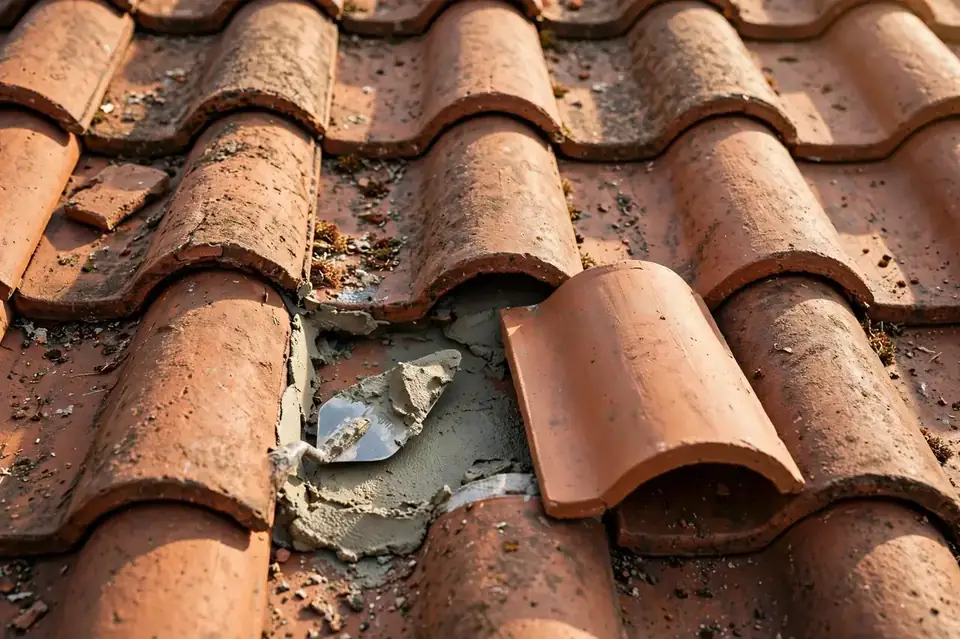
Tile roof repair on a residential home in Secaucus NJ
Illustrative roofing image — not an actual customer project.

Cracked and Slipped Roof Tile Repairs

Tile-specific repair work for Secaucus homes — each addressing a distinct failure, not generic roofing definitions:

Individual Tile Replacement

Broken and cracked tiles are unhooked and lifted out; replacements matched to the existing profile go in the same way — without disturbing the surrounding field.

Slipped Tile Re-Securing

Tiles that have slid out of place — usually from corroded fasteners — are reset with sound clips and nails so they stay put through wind and freeze-thaw.

Ridge & Hip Tile Re-Bedding

Ridge and hip caps loosened by wind and frost are re-bedded and re-secured. These are the most exposed lines on any tile roof and the first to work loose.

Underlayment Patching

Where the waterproof membrane beneath the tiles is compromised, it gets patched or section-replaced — the part of the job you never see and most need.

Valley Clearing & Repair

Tile valleys collect leaves and grit that dam water sideways under adjacent tiles. Valleys are cleared and repaired so water runs downhill again.

Penetration Flashing

Chimneys, vents, and skylights on tile need custom-bent metal — stock flashing doesn't follow tile profiles. Failed flashing gets rebuilt to fit.

Signs of Tile Roof Damage

Cracked or broken tiles

Visible splits from impact or freeze-thaw. May indicate: direct water entry points, especially under wind-driven rain. Next step: have them replaced before the next storm.

Slipped tiles

Tiles sitting out of line or shifted downhill. May indicate: corroded fasteners letting go. Next step: re-securing before wind finishes the job.

Tile fragments in gutters

Pieces washing down after wind or storms. May indicate: breakage higher up the slope. Next step: a tile-by-tile survey to find every failed piece.

Stains despite intact-looking tiles

Interior water marks while the tiles look fine from the street. May indicate: underlayment failure beneath — the classic hidden tile-roof leak. Next step: inspection that looks past the tiles.

Heavy moss or lichen growth

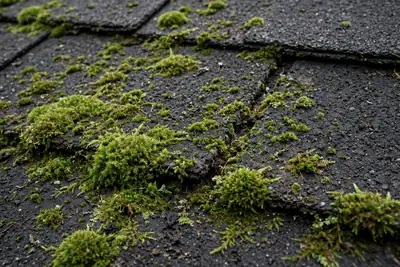
Green and gray buildup spreading across the field. May indicate: trapped moisture accelerating decay of what's underneath. Next step: professional cleaning and underlayment check.

Debris packed in valleys

Leaves and grit mounded where slopes meet. May indicate: water being forced sideways under tile edges. Next step: valley clearing before it becomes a leak.

Replacing Individual Tiles Safely

The single most important fact about tile roofs: the tiles are the armor, not the waterproofing. Clay and concrete tiles shed the bulk of rain and take the UV and impact beating — but the actual watertight layer is the underlayment membrane beneath them. A tile roof with intact tiles but failed underlayment will leak; one with a few broken tiles but sound underlayment usually won't.

A slipped tile does not always identify the water-entry point. The surrounding underlayment and flashing transitions may also need assessment.

Clay vs. concrete tiles

Clay tile is fired earth — extremely long-lived, colorfast, heavy. Concrete tile is the common modern choice: cheaper and lighter, but more porous and more vulnerable to freeze-thaw and surface erosion.

Profile matching

Tiles come in profiles — flat, S-curve, barrel — and matching the existing one matters for looks and water-shedding. Thickness and coursing alignment matter more than exact color.

Discontinued tiles

A roof tiled twenty years ago may use a shape nobody makes anymore. Salvage and specialty suppliers can often source it, but it takes longer and costs more — availability should be established early.

Walk boards, not foot traffic

Clay and concrete tiles crack under concentrated weight. Proper tile work uses walk boards or foam pads that spread the load — anyone proposing to walk the tiles directly is showing their inexperience.

Sealant is never the repair on tile either — cracked tiles get replaced, not caulked. A bead of sealant over a split tile fails within a season or two.

Underlayment, Flashing and Tile Matching

How a tile repair typically moves from inspection to finished work:

1

Inspection

A tile-by-tile survey marks every broken, cracked, or slipped tile — done from walk boards. Underlayment condition is checked at eaves, penetrations, and anywhere the membrane is visible.

2

Findings

What's failing and why: tile damage, underlayment condition, valley state, flashing at penetrations, and fastener corrosion — including attic-side evidence of where water is getting past the tiles.

3

Scope & Estimate

The repair scope is defined — which tiles, what underlayment work, what flashing — with replacement-tile availability confirmed before anyone commits to a timeline.

4

Agreed Work & Checks

Tiles are replaced, underlayment patched, valleys cleared, and flashing verified. The work is checked afterward — a tile repair counts as done when the roof sheds water properly again.

Localized Tile Repairs vs Broader Work

Cracked and slipped tiles are maintenance, not roof failure — as long as the underlayment beneath is sound. The real question on any tile roof is what the membrane looks like:

Localized tile repairs

  • A handful of cracked or slipped tiles
  • Underlayment sound beneath the damage
  • Isolated valley or flashing failures
  • Replacement tiles available or sourceable

Broader work may be needed

  • Underlayment aged out across large areas
  • Widespread tile breakage or fastener failure
  • Repeated leaks despite tile replacement
  • Membrane failure shown by attic-side evidence

When the membrane has failed broadly, the honest fix is a lift and relay: tiles carefully removed, new underlayment laid, original tiles set back. More work than spot repair, less than a full re-roof — and the evidence for which situation applies should be shown, not just asserted.

Tile Repair Pricing Factors

No invented prices — but these are the factors that set the real number on a tile job:

Number of tiles

A handful of replacements versus widespread breakage across the field.

Tile availability

Current profiles are straightforward; discontinued ones need salvage sourcing at a premium and add lead time.

Underlayment scope

Simple patching versus section replacement versus full lift-and-relay — the biggest cost swing on tile work.

Roof pitch & access

Steep tile is slower, more careful work; tight Secaucus lots add staging complexity.

Valley & flashing work

Custom-bent flashing at penetrations and valley rebuilds are skilled labor, priced accordingly.

Related damage

Rotten battens or decking found beneath failed underlayment expands the scope.

When Tile Damage Becomes an Emergency in Secaucus

Tile sheds water; the underlayment beneath does the waterproofing. A few slipped tiles are a repair — but once underlayment is torn or exposed across an area, water enters fast.

In Secaucus, big commercial flat roofs can pond and fail suddenly — a wide new stain after rain deserves an urgent look.

  • Slipped tiles in patches — wind can walk tiles upslope in rows; bare underlayment won't survive many rains. In Secaucus, don't overlook large flat commercial sections.
  • Cracked tiles from impact — branches or debris can fracture tiles and puncture what's beneath in the same strike. Secaucus's warehouse roofs pond after cloudbursts — stains spread fast.
  • Stains under a tile field — ceiling stains below a tile roof point to underlayment failure, not just a slipped tile. In Secaucus, residential and commercial roofs fail differently; check both.
  • Commercial tile fields — Secaucus's larger tile installations shed wind-driven rain well until rows lift; once a row goes, the exposed underlayment below is on a clock.

In Secaucus, ponding only gets worse while you wait: Emergency help →

Need Tile Roof Repair in Secaucus?

Cracked, slipped, or missing tiles — or stains suggesting the underlayment beneath has failed. Call to discuss tile repair options for your Secaucus home.

Call (201) 330-4743

Tile Roof Repair Considerations for Secaucus Properties

  • Tile is uncommon here — Secaucus housing is mostly shingle and low-slope, so tile roofs are the exception. Fewer roofers do tile work weekly: confirm tile experience specifically — not just general roofing experience — before hiring.
  • North End residential — the older residential streets hold most of the town's tile, often on homes where the tiles have outlived their original underlayment.
  • Townhome & HOA contexts — in garden-apartment and townhome communities, visible material changes sometimes need association approval. Check the governing documents before authorizing exterior work.
  • Residential, not industrial — the Turnpike corridor's big-box and warehouse roofs are a different trade entirely; this page covers residential tile only.
  • Freeze-thaw exposure — New Jersey winters widen hairline tile cracks season by season; fall repairs beat spring discoveries.
  • Access constraints — tight lots and attached buildings complicate staging and material handling for tile, which is heavier and more fragile to move than shingles.

Tile Roof Repair FAQs

Can just a few broken tiles be replaced?

Yes — that's the normal case. Individual tiles unhook and lift out without disturbing the surrounding field, and replacements go in the same way. Spot replacement only stops making sense when the underlayment beneath has failed across large areas.

Will the new tiles match the old ones?

If the profile is still manufactured, very closely. If it's been discontinued, matching gets harder — salvage and specialty suppliers can often source it, but it takes longer and costs more. Establishing availability early prevents mid-project surprises.

How soon should broken tiles be fixed?

Before the next serious rain or freeze. A cracked tile is a direct water entry point, and freeze-thaw widens every crack winter by winter. A few broken tiles are a quick repair; the same tiles left for seasons can mean underlayment damage too.

Do the tiles themselves waterproof the roof?

No — the most important thing to understand about tile. Tiles shed most water and protect what's beneath, but the underlayment membrane is the actual waterproof layer. Leaks on intact-looking tile roofs are almost always underlayment failures.

Can tile repairs be done in cold weather?

Individual tile replacement can, with care — tiles are more brittle in the cold, so handling is slower. Underlayment and flashing work follows the membrane manufacturer's temperature requirements. Fall scheduling avoids the worst of both constraints.

What affects the cost of tile roof repair?

The number of tiles, tile availability (current vs. discontinued profiles), underlayment scope, roof pitch and access, valley and flashing work, and any related damage like rotten battens. A firm figure only exists after inspection.

What should be checked before hiring for tile work?

Tile-specific experience (not just general roofing), how the roof is protected during work (walk boards or equivalent), whether replacement tiles are in stock or need sourcing, and what the underlayment looks like beneath the damage. And verify license and insurance yourself.

Need Tile Roof Repair in Secaucus, NJ?

Cracked tiles, slipped tiles, or signs the underlayment beneath has given out — call now to discuss tile repair options.

Call Now — (201) 330-4743

24/7 emergency roof repair calls answered; regular repairs are scheduled.

☎ Call (201) 330-4743