24/7 Emergency Roof Repair — Secaucus, NJ(201) 330-4743
Union City Roof Repair Call (201) 330-4743

Chimney Flashing Repair in Secaucus, NJ

Water staining near the fireplace or chimney breast usually traces back to one thing: the flashing where the chimney meets the roof. Chimney flashing repair in Secaucus covers failed step flashing, pulled counter-flashing, worn mortar joints, and missing crickets — fixed at the source, not just sealed over.

  • Leak-source diagnosis — water entry traced to the actual failed joint before any work is scoped
  • Proper metalwork — step flashing woven course by course, counter-flashing locked into reglets
  • Emergency calls answered 24/7 — active chimney leaks get urgent attention
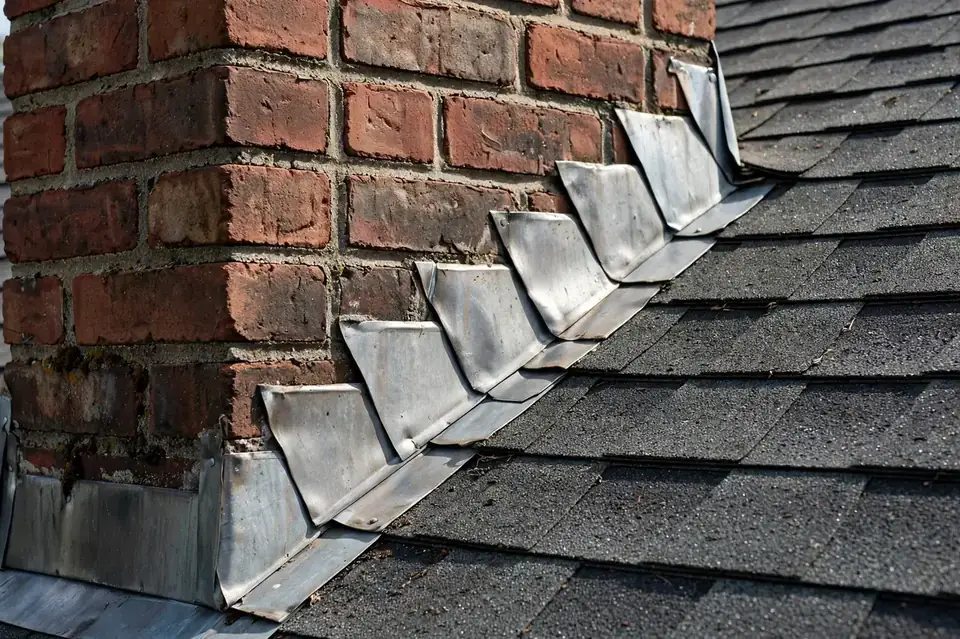
Chimney flashing repair on a residential roof in Secaucus NJ
Illustrative roofing image — not an actual customer project.

Chimney Leak and Flashing Repair Services

Flashing fails in specific ways, and each one gets a specific repair — not a generic patch:

Step Flashing Replacement

The L-shaped pieces woven between shingle courses up both sides of the chimney. When rusted or lifted, they're replaced piece by piece, each overlapping the one below so water always sheds outward.

Counter-Flashing Reset

The outer metal layer set into the chimney's mortar joints. Pulled or loose counter-flashing is re-cut into fresh reglets and mechanically locked in — not just caulked to the brick face.

Chimney Cricket Installation

A small peaked diverter built behind wide chimneys so water flows around the brick instead of ponding against it. Chimneys wider than about 30 inches generally should have one.

Sealant-Line Renewal

On sound, firmly seated metal, renewing the aged sealant lines is legitimate maintenance — a real repair, not a cover-up, when the metal underneath is solid.

Mortar Joint Repointing

Crumbling mortar can't hold counter-flashing. Deteriorated joints are repointed first so the new flashing has something solid to lock into.

Chimney Leak Diagnosis

Water travels along decking before surfacing — often far from the chimney. Interior evidence and roof-surface inspection together pin down whether the flashing is actually the culprit.

Signs Chimney Flashing Needs Repair

Rust streaks on the brick

Orange-brown staining running down the chimney face. May indicate: the flashing metal is corroding. Next step: corroded metal can't be resealed — have it inspected for replacement.

Ceiling stains near the fireplace

Discoloration on the ceiling or wall around the chimney breast. May indicate: water entering at the flashing line and traveling along framing. Next step: note whether it appears in every rain or only wind-driven ones.

Damp or musty attic near the chimney

Moisture smell strongest on the chimney side of the attic. May indicate: a slow flashing leak wetting the sheathing. Next step: attic-side staining maps the leak's path — worth documenting.

Cracked or missing mortar

Deteriorated joints where counter-flashing enters the brick. May indicate: the flashing's mechanical lock is failing. Next step: mortar condition decides whether repointing comes before the flashing work.

Visible gaps at the brick

Daylight or separation between flashing and chimney. May indicate: counter-flashing pulled free of its joints. Next step: gaps admit wind-driven rain directly — don't wait on them.

Shingles lifting at the chimney base

Curling or raised shingles around the chimney sides. May indicate: step flashing underneath has shifted or corroded. Next step: the step flashing needs eyes on it, not just the shingles.

Step and Counterflashing Solutions

How the repair is built matters more than what it's called. These are the technical specifics:

Step flashing, woven not laid

Each L-shaped piece interweaves with a shingle course — metal, shingle, metal, shingle — up both chimney sides. Pieces laid on top without weaving are a shortcut that fails.

Counter-flashing in reglets

A reglet is a groove cut into the mortar joint that receives the counter-flashing's top edge, which is then sealed in place. This mechanical lock is what separates a proper job from a caulk-only shortcut.

Material compatibility

Galvanized steel is the residential standard — affordable until its coating wears. Aluminum won't rust but dents. Copper lasts longest at higher cost. Whatever's chosen, adjoining metals must be compatible: copper against galvanized steel causes galvanic corrosion.

Scope and limitations

Flashing repair fixes the roof-to-chimney joint. It doesn't rebuild a failing chimney crown, reline a flue, or correct structural chimney lean — those are separate masonry problems that need their own scope.

Chimney Flashing Repair Considerations for Secaucus Properties

  • North End residential chimneys — older brick chimneys on capes, ranches, and split-levels; decades of freeze-thaw have worked many mortar joints loose, which is exactly what counter-flashing depends on.
  • Townhome and HOA communities — on shared buildings, chimney flashing may fall under association responsibility. Check the governing documents and contact the association before authorizing exterior work; responsibility varies by property and by the documents.
  • Freeze-thaw cycling — North Jersey winters are the main enemy: water enters mortar joints, freezes, expands, and gradually loosens the counter-flashing's grip season after season.
  • Residential vs. industrial — warehouse and industrial roofs along the Turnpike corridor use different flashing systems entirely. This page covers residential chimney flashing; mention it when calling if the building is mixed-use or commercial.
  • Chimney height and roof access — Secaucus's multi-story homes and tight lots affect staging and setup, which is part of why an on-site look precedes any firm scope.

When Flashing Failure Becomes an Emergency in Secaucus

Flashing is the seal where the chimney meets the roof — the most leak-prone joint on most homes. Minor flashing wear can wait for a scheduled visit; wind-peeled or displaced flashing cannot.

In Secaucus, big commercial flat roofs can pond and fail suddenly — a wide new stain after rain deserves an urgent look.

  • Water tracing the chimney — stains spreading outward from the chimney breast, or drips in the attic around the chase, point to a failed seal. In Secaucus, don't overlook large flat commercial sections.
  • Flashing visibly lifted — metal bent back or daylight showing along the chimney base after wind leaves a direct path for rain. Secaucus's warehouse roofs pond after cloudbursts — stains spread fast.
  • Saturated masonry — brick that stays dark and wet days after rain is absorbing water through failed flashing — stop the entry before it spreads. In Secaucus, residential and commercial roofs fail differently; check both.
  • Wide-chase commercial stacks — Secaucus's larger buildings have wide chimney chases with long flashing runs; one failed stretch can admit a lot of water.

In Secaucus, ponding only gets worse while you wait: Emergency help →. Winter brings its own chimney problems — freeze-thaw splits old mortar and works flashing loose: Winter roof emergencies →

Need Chimney Flashing Repair in Secaucus?

Stains near the fireplace, rust on the brick, or gaps at the chimney base — call to discuss chimney flashing repair options in Secaucus.

Call (201) 330-4743

Masonry, Mortar and Cricket Considerations

Flashing work often touches masonry. Here's how the job typically sequences:

1

Inspect

Counter-flashing engagement, step flashing condition under lifted shingles, mortar joint integrity, cricket presence, and attic-side water evidence — the full picture before anything is quoted.

2

Findings

What's actually failed: metal condition, whether the counter-flashing is still seated, whether mortar needs repointing first, and whether the problem is flashing at all versus crown or masonry.

3

Scope and estimate

The repair is defined element by element — step flashing, counter-flashing, surrounding shingles, any repointing — so the quote names the work, not just "fix chimney leak."

4

Agreed work and checks

The approved scope is completed and the assembly verified for a continuous water-shedding path. No guaranteed method or timeline beyond what's agreed.

Repair vs Full Flashing Rebuild

A sealant refresh on sound, firmly seated metal is legitimate maintenance. But sealant over rusted-through metal or dislodged counter-flashing buys months, not years:

Localized repair may be enough

  • Metal solid and still seated in its joints
  • Failure limited to aged sealant lines
  • One side or section affected
  • Mortar joints sound enough to hold flashing

Full rebuild is the durable fix

  • Metal rusted through or perforated
  • Counter-flashing pulled free of mortar joints
  • Step flashing corroded under multiple courses
  • Mortar too deteriorated to re-anchor metal

Which situation applies should be shown to you — lifted shingles, photos of the metal — not just asserted. Be wary of caulk proposed as the whole solution without exposing what's underneath.

Chimney Flashing Repair Cost Factors

No invented price ranges — but these are what move the real number:

Scope of metalwork

A sealant refresh and a full step-and-counter replacement are very different jobs in labor and materials.

Chimney height and access

Tall chimneys and steep pitches mean more setup time and safety equipment.

Masonry condition

Deteriorated mortar joints needing repointing add a separate trade to the project.

Cricket addition

Building one where none exists is extra carpentry plus additional flashing work.

Surrounding shingles

Brittle or discontinued shingles around the chimney base complicate removal and reinstallation.

Related damage

Decking or framing softened by a long-active leak extends the scope beyond the flashing itself.

Chimney Flashing Repair FAQs

Can chimney flashing be repaired, or does it always need replacing?

It depends on the metal's condition. If the step and counter-flashing are solid and still seated, a sealant refresh is legitimate maintenance. If the metal is rusted through, or the counter-flashing has pulled out of its mortar joints, replacement is the only durable fix — sealant over failed metal just buys time.

Why does it only leak during heavy or wind-driven rain?

Light rain may not reach the failed joint with enough volume to penetrate, while wind-driven rain is pushed sideways directly into gaps around the flashing. Intermittent leaking is still leaking — the joint is compromised and will worsen.

Is a bead of caulk enough to fix it?

As the entire repair, no — not for long. Sealant is a component of a proper flashing assembly, not a substitute for one. A caulk-only fix over failed metal typically lasts a season or two before letting go.

How can I tell if the problem is flashing or the chimney masonry itself?

Flashing problems show as leaks at the roof-to-chimney joint with the brick itself looking intact. Masonry problems — spalling brick, a deteriorated crown, leaning — show in the chimney structure above the roofline. An inspection should distinguish the two, because they need different trades.

What is a cricket, and does my chimney need one?

A small peaked diverter built behind a wide chimney so water flows around it instead of ponding against the brick. Chimneys wider than about 30 inches generally should have one.

How long does chimney flashing last?

Often as long as the surrounding roof — but sealant lines need periodic renewal and freeze-thaw works the mortar joints every winter. Any specific answer comes from inspection, not a timetable.

What affects the cost of chimney flashing repair?

The scope of metalwork, chimney height and roof access, masonry condition, whether a cricket is added, the state of surrounding shingles, and any related decking damage. A firm figure follows an on-site inspection.

Should chimney flashing be checked before winter?

Yes — fall is the practical window. Freeze-thaw is what pries joints open, so going into winter with sound flashing and fresh sealant lines prevents the spring leaks that follow every thaw cycle.

Related Roof Repairs

Chimney flashing rarely fails in isolation. These cover the jobs that pair naturally with it:

Dormer repair Secaucus NJ

Dormer Repair

Same step-flashing craft at dormer cheeks — addressing both in one visit saves a second mobilization.

Dormer repair
Tile roof repair Secaucus NJ

Tile Roof Repair

On tile roofs, flashing needs custom-bent metal to follow the tile profile.

Tile repair
Roof repair Secaucus NJ

Roof Repair in Secaucus

A full roof assessment makes sense after a long-active leak, since surrounding decking may be affected.

Secaucus roof repair
Storm damage roof repair

Storm Damage Repair

Wind-driven rain finds every flashing weakness — post-storm checks catch what the last storm opened.

Storm repair

Need Chimney Flashing Repair in Secaucus, NJ?

Rust streaks, ceiling stains near the fireplace, or gaps where the chimney meets the roof — call now to discuss chimney flashing repair in Secaucus.

Call Now — (201) 330-4743

Emergency calls answered 24/7.

☎ Call (201) 330-4743