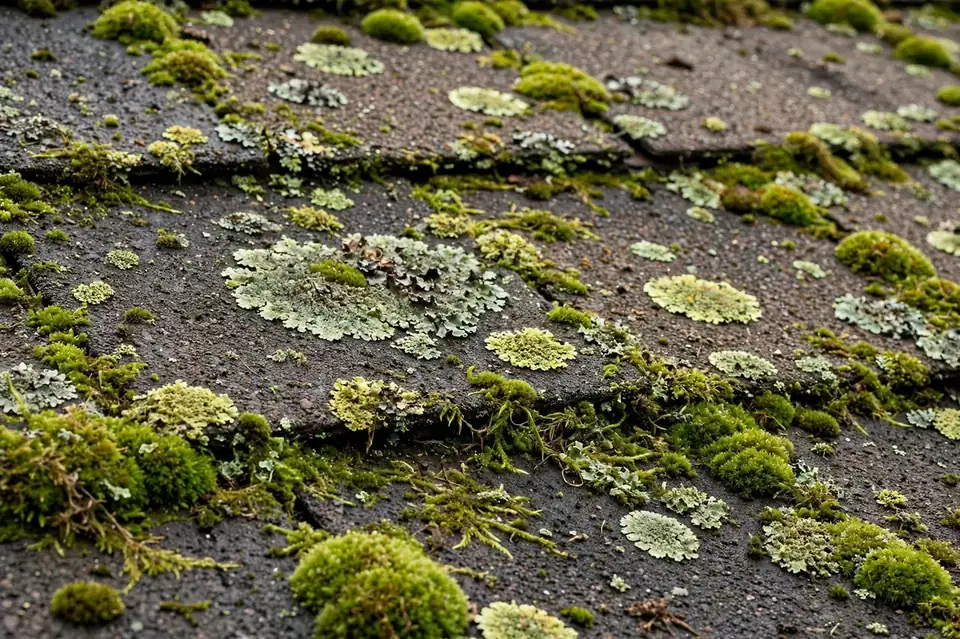
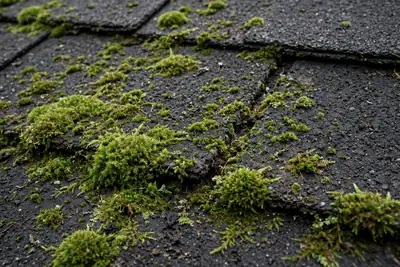
Moss on shaded north-facing slopes holds moisture against shingles long after rain stops — lifting tabs, stripping granules, and shortening roof life. Professional soft-treatment moss and algae removal protects the roof without the damage pressure washing causes.

What moss and algae removal actually involves — specific services, not generic promises:
A moss-killing treatment applied to affected slopes and left to work over days or weeks. Colonies die in place through chemistry — no force, no stripped granules.
Once dead, moss is removed with soft brushing. Gutters and downspouts packed with moss debris are cleared in the same visit.
Black streaks are usually algae, not moss — a different organism that needs its own treatment approach. Both are addressed, each with the right method.
Every method is compatible with asphalt shingles and fragile aging roofs. Pressure washing is never used — it removes the moss and years of roof life together.
Metal strips near the ridge release ions with each rain, creating a surface moss struggles to recolonize — the established long-term prevention.
Shade and debris source review — tree overhang trimming, gutter maintenance — so treatment resets the clock instead of just repeating it.
Moss establishing on north-facing or tree-covered sections. What it may indicate: persistent damp that will keep feeding growth. Next step: earlier treatment is simpler — colonies get harder to clear as they mature.
Edges visibly pried upward. What it may indicate: wind can now catch those tabs, and freeze-thaw will pry further. Next step: don't wait — this is past cosmetic.
Bare-looking patches where moss sat. What it may indicate: the shingle's UV protection is already compromised there. Next step: assess whether the underlying shingles are still serviceable.
Dark staining mixed with moss. What it may indicate: algae alongside moss — a different organism feeding on the same damp conditions. Next step: treatment should address both, with the right method for each.
Clumps washing into gutters and downspouts. What it may indicate: mature, well-established colonies shedding. Next step: gutters need clearing as part of treatment.
Persistent mustiness near shaded attic areas. What it may indicate: moisture lingering where it shouldn't. Next step: check whether the issue is still surface-level or already consequential.
The method has to suit the roof — aggressive cleaning destroys what it's meant to save:
Soft treatment only. Shingle granules are the UV armor — pressure strips them far faster than moss ever could. Treatment kills colonies in place; dead material is brushed away gently.
Older shingles with worn granules grip moss more readily and tolerate less force. Low-impact treatment with extra care on brittle tabs — and an honest assessment of whether the roof has enough life left to justify treatment.
Moss traps moisture in tile gaps and accelerates underlayment decay. Treatment addresses the growth; the underlayment beneath should be evaluated at the same time. Tile roof repair →
Soap and potassium-salt based products are far gentler on landscaping than bleach-based ones, which can damage plants, discolor siding, and corrode metal flashing. Runoff precautions for the yard below are part of the job.
Pressure washing is never the answer on a shingle roof. What looks brilliantly clean afterward is a roof with years of life blasted off.
Moss lifting shingles or green growth spreading on shaded slopes — call to discuss soft-treatment options for your roof.
Call (201) 330-4743How moss removal typically proceeds — inspection first, with no promised method or fixed timeline:
Affected slopes are examined — moss extent and thickness, shingle condition underneath, gutters, flashing lines, and tree overhang. The first question: are the shingles worth saving?
What's growing, how deep it goes, and what the roof underneath looks like. You'll hear whether treatment makes sense or the roof is past the point where cleaning helps.
The treatment plan and estimate are set from the findings — product choice, areas covered, gutter clearing, and any prevention add-ons like zinc strips.
Treatment is applied and left to work; dead moss is cleared gently, sometimes on a follow-up visit. The roof is checked after — treatment isn't done until the growth is.
Not every green roof needs the same answer. Moss is a moisture problem; algae staining is mostly a cosmetic one — and the right response depends on which you're looking at:
Cleaning a dying roof isn't maintenance. An honest assessment tells you which situation you're in — even when the answer means different work than you called about.
No invented prices — but these are the factors that set the real number:
Spot treatment on one slope versus whole shaded sections versus the entire roof.
Surface film versus deep colonies prying up tabs — mature growth may need repeat applications.
Steep pitches and hard-to-reach slopes take longer to treat safely.
Standard shingles versus tile or specialty materials, which need different handling.
Flashing corrosion or shingle damage hidden under growth, discovered during treatment.
Often bundled — moss debris packed in gutters has to go somewhere.
Zinc or copper strip installation is separate work with its own scope.
Treatment needs dry weather to work; timing affects when the job can proceed.
It damages. Moss holds water against the shingle surface, lifts shingle edges so wind can catch them, and subjects the roof to repeated freeze-thaw prying that strips protective granules. What starts cosmetic becomes structural if left alone — the timeline is seasons, not weeks, but the direction is one-way.
Don't. Pressure washing strips the granules that protect shingles from UV — it removes the moss and years of roof life at the same time. Proper removal is always treatment followed by gentle brushing, never high pressure.
Moss is a plant with root-like rhizoids that grip the shingle surface and hold water; algae is a microorganism that causes black streaking but doesn't pry shingles up. They're different organisms needing different treatments — and they often appear together on the same damp, shaded roof.
Days to weeks, depending on the product and colony maturity. Soft treatment kills moss in place through chemistry — dead material gets gently brushed away, sometimes on a follow-up visit.
Eventually, yes, if the conditions that grew it don't change — shade, moisture, and time are persistent. Zinc or copper strips at the ridge inhibit regrowth, and trimming overhanging trees for sun and airflow is the most effective long-term step. Treatment resets the clock; it doesn't stop it.
It depends on the product — soap and potassium-salt based treatments are far gentler on landscaping than bleach-based ones, which can damage plants and discolor siding. Ask what will be applied and what runoff precautions are taken for the yard below.
The roof area affected, moss extent and maturity, access and pitch, roofing material, any related damage found under the growth, gutter clearing, and prevention add-ons like zinc strips. A firm figure only exists after inspection.
Surface-level growth on a sound roof can wait for the right dry-weather window — moss works on a timeline of seasons. But moss that's lifting tabs, sitting over granule loss, or packing gutters is already past cosmetic and shouldn't be left through another winter.
Green growth spreading on shaded slopes or moss lifting your shingles — call now to discuss soft-treatment options for your roof.
Call Now — (201) 330-474324/7 emergency roof repair calls answered; regular service appointments are scheduled.