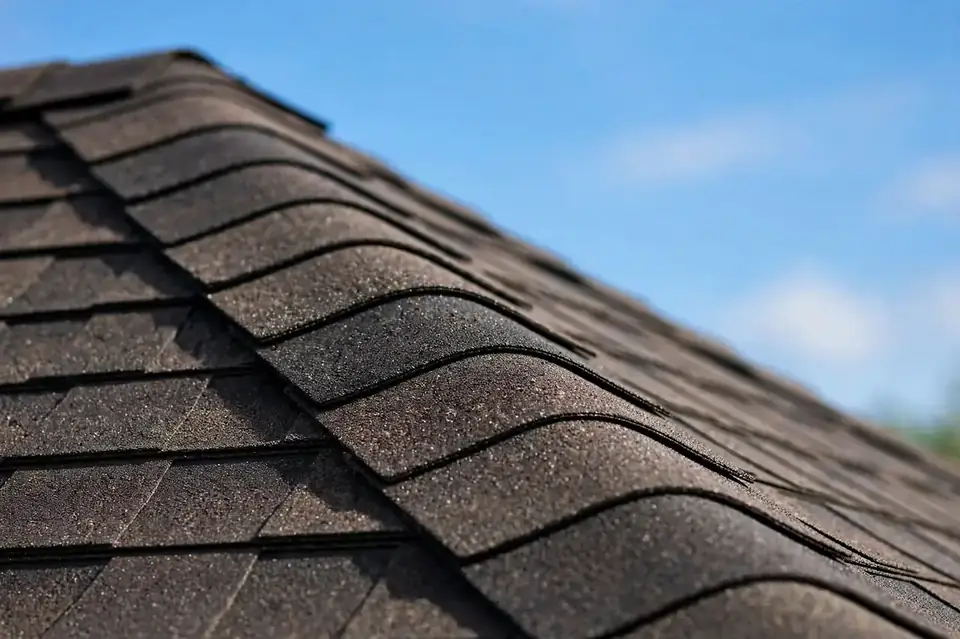
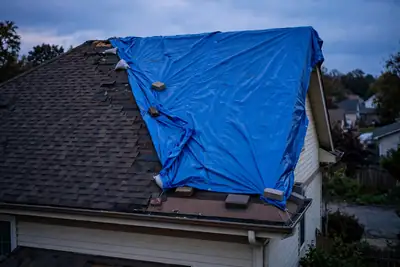
Loose, cracked, or missing ridge caps leave the highest line of the roof open to wind and rain. Ridge cap repair in West New York covers diagnosis, cap replacement, and re-securing — so the peak holds through the next storm.

Not every ridge problem needs the same fix. The right repair depends on what's actually failed:
Caps that have lifted but remain intact can be re-seated with proper fasteners and sealant — a targeted fix when the caps themselves are still sound.
Split or brittle caps are removed and replaced individually with compatible hip-and-ridge shingles, woven into the adjoining courses.
Gaps in the ridge line get new caps matched to the existing roof, with underlayment checked beneath before anything is closed up.
Nails backing out or left exposed at the ridge are re-driven or replaced and sealed — open fasteners are a direct water path into the roof system.
The vent beneath the caps is inspected as part of the job. A crushed or separated vent is repaired or replaced — capping over a failed vent hides the problem.
When damage runs along the whole peak — repeated wind failure, deteriorated underlayment — the ridge section is stripped back to sound material and rebuilt.
The ridge should read as one straight line. What it may indicate: caps shifting or lifting. Next step: check it after every wind event — movement spreads.
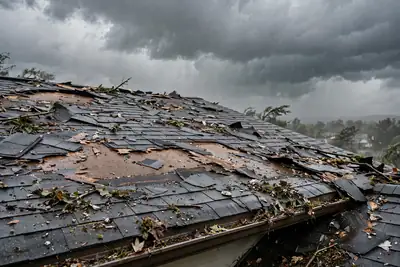
Visible gaps along the peak, sometimes with underlayment showing. What it may indicate: wind uplift tore caps free. Next step: open ridge admits rain directly — don't wait through another storm.
Heavy granule wash following a storm. What it may indicate: cap surfaces scouring or breaking down. Next step: worth an inspection before the next weather.
Light visible where the slopes meet. What it may indicate: a breach at the peak. Next step: where light gets through, water follows — arrange an assessment.
A loose cap slapping in gusts. What it may indicate: fasteners failing or sealant released. Next step: one flapping cap becomes several missing caps fast.
Interior staining near the peak of the ceiling. What it may indicate: water entering at the ridge and traveling down. Next step: the entry needs tracing from the roof side.
Ridge repairs last when the materials work as a system. Key compatibility points:
Proper ridge caps are pre-cut, thicker pieces designed to fold over the peak — with full sealant strips. Caps cut from field shingles are thinner, seal poorly, and fail sooner.
Ridge nails must hit solid material at the right depth and spacing. Under-driven or over-driven fasteners, or nails missing the deck, are how wind starts peeling a ridge.
Caps and vent are one assembly. The vent must be sound, correctly sized, and properly flashed at its ends — a new cap over a failed vent is a cosmetic fix.
Hip-and-ridge caps come in standard colors matched to major shingle lines, so close matches are the norm. On discontinued colors, an exact match may not exist — that should be stated upfront.
Scope limits: ridge cap repair addresses the peak assembly. If the field shingles on the slopes are failing too, that's a broader scope — the inspection should say so plainly.
Not every property faces every condition — but whichever apply shape the inspection and the repair. Describe your roof when you call.
Ridge caps guard the most exposed seam on the roof. A single missing cap is often just a repair — but wind rarely takes just one, and an open ridge line channels water straight into the roof.
In West New York's attached multifamily blocks, a leak rarely stays inside one unit for long — early action protects neighbors too.
In West New York's stacked blocks, an opening affects more than your unit: Emergency help →
Loose, cracked, or missing ridge caps should be addressed before the next wind event. Call to discuss ridge cap repair options.
Call (201) 330-4743The typical workflow, from first look to finished ridge:
The ridge is examined from the roof itself — cap condition, fasteners, the vent beneath, and the adjoining courses. Ridge condition can't be judged from the ground.
What's failed and why: wind uplift, aged sealant, fastener failure, vent damage. The findings determine whether it's a spot repair or a section rebuild.
The repair scope is defined — how many caps, vent work yes or no, material match — and estimated before anything is removed.
Failed caps come off back to sound material, replacements go on with proper fastening and sealant, and the finished ridge is checked line by line.
A wind-torn section of caps on an otherwise sound ridge is a repair. The distinction comes from inspection findings:
No invented prices — the real cost drivers:
A few caps versus the full peak — the length of ridge involved sets the labor.
Standard hip-and-ridge versus specialty profiles or hard-to-match discontinued lines.
Vent in good shape versus crushed or separated vent needing repair or replacement.
Steep pitches, height, and tight lots change how the crew reaches and works the peak safely.
Adjoining field shingles or underlayment damaged along with the caps.
Storm-torn ridges needing urgent attention cost more than planned work. A firm figure follows inspection.
From the ground: a peak line that isn't straight — crooked, lifted, or missing caps — plus granule piles in gutters after wind. From inside: daylight visible along the ridge in the attic. In high wind, a loose cap flaps audibly.
Not through another storm. The ridge is the roof's highest point, so any breach admits rain directly into the roof system with no slope to shed it — and wind damage spreads: one lifted cap becomes several missing caps fast.
The town's elevated Palisades position means stronger, less obstructed wind can reach these roofs than lower-lying streets nearby — which is why wind-rated installation details matter more here, not less.
Hip-and-ridge caps come in standard colors matched to major shingle lines, so close matches are the norm. On much older roofs with discontinued shingle colors, an exact match may not exist — that should be stated upfront.
Only if it needs it — but it should always be assessed as part of the job. A crushed or separated vent is both a leak path and a wind weak point, and capping over a failed vent just hides the problem.
The length of ridge involved, cap material and availability, whether the ridge vent needs work, roof access and pitch, related damage to adjoining shingles, and whether it's emergency or scheduled work. A firm figure follows inspection.
Don't climb up yourself. Note what's visible from the ground — how many caps, which stretch of the peak — and call. If the ridge is open, emergency tarping can protect it until the permanent repair is done.
Ridge problems rarely travel alone. These cover the usual companions:

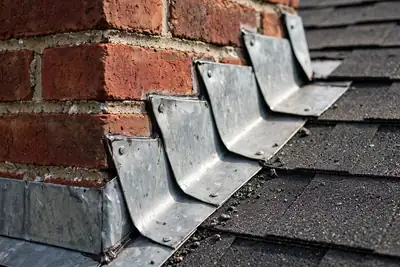
Step and counter flashing rebuilt where chimneys meet the roof near the peak.
Flashing repair

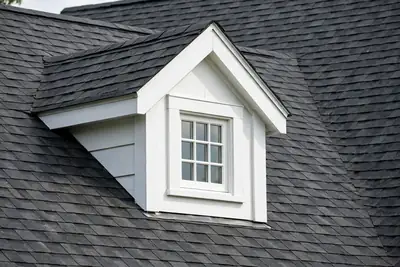
Leaking dormers — flashing and transitions where dormers meet the main roof.
Dormer repair
Storm-torn ridges and active leaks — urgent response when the roof is open.
Emergency helpLoose, cracked, or missing ridge caps — call now to discuss repair options for your roof's peak.
Call Now — (201) 330-4743Emergency calls answered 24/7.