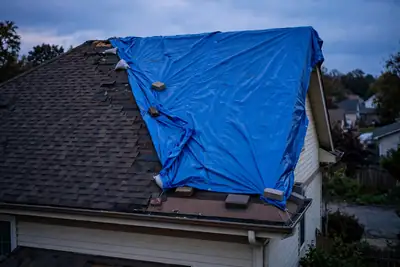
Displaced ridge caps, exposed fasteners, or a failing ridge vent leave the highest line of your roof open to wind and rain. Ridge cap repair in Weehawken covers re-seating, replacement, and vent work on pitched-roof ridge assemblies — done with materials matched to the exposure.

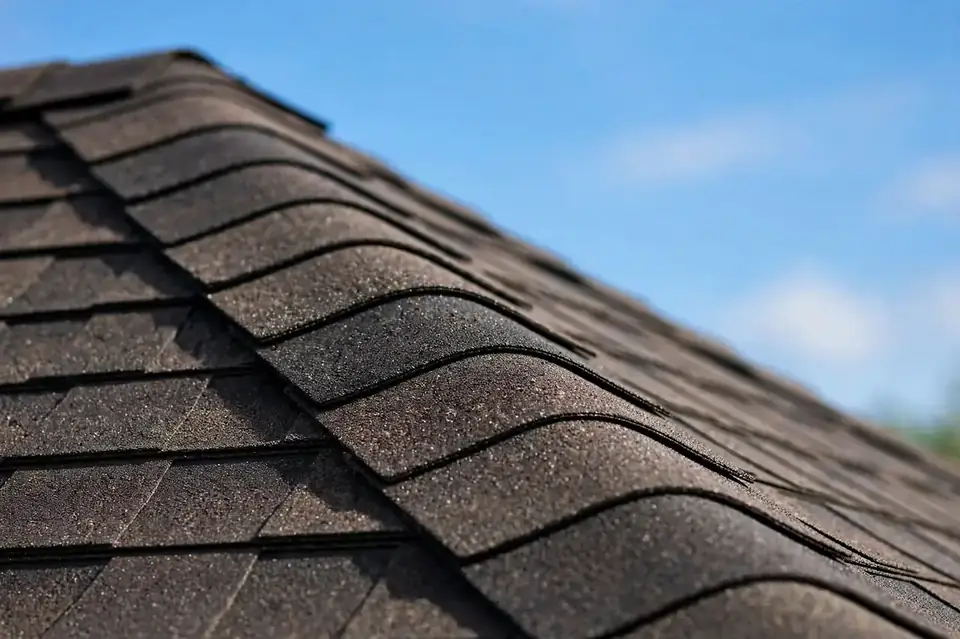
The ridge cap is a pitched-roof assembly — folded cap shingles or a vented ridge system closing the peak where the two slopes meet. Not flat-roof coping, not edge flashing. Repair options depend on what's actually failed:
Caps lifted but intact get re-seated with proper fastening and adhesive seal. One lifted cap catches the next gust — re-seating stops the progressive failure before neighbors follow.
Cracked, torn, or missing caps are replaced with compatible ridge cap shingles — pre-folded, thicker than field shingles, made to straddle the peak. High-profile versions resist uplift better on exposed ridges.
Corroded or storm-damaged vent sections are rebuilt or replaced. A corroded vent admits wind-driven rain along the whole run — vent metal and fasteners must suit the exposure.
Backed-out or rusted nails replaced with corrosion-resistant fasteners. Near the river, standard steel fasteners rust and lose grip — stainless is the standard recommendation for salt air.
Aged adhesive bonds renewed where caps have loosened but the materials remain sound. Sealant is the gasket behind proper fastening — never the repair on its own.
When a full run has aged out — widespread lifting, vent corroded along its length — the ridge gets re-capped end to end with new underlayment beneath.
The peak should read as one clean line. May indicate: wind uplift working the leading edges. Next step: check after every storm — one lifted cap takes neighbors with it.
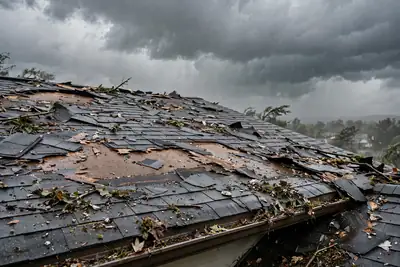
Bare gaps in the ridge line, sometimes with underlayment showing. May indicate: caps torn off by gusts or dislodged as neighbors lifted. Next step: exposed ridge admits rain straight down — don't wait through another storm.
Orange-brown streaks along the peak. May indicate: corroding vent components or fasteners. Next step: rust isn't cosmetic — corroded fasteners lose grip and corroded vents admit water.
Audible movement from the roof during gusts. May indicate: loosened caps or vent sections flexing at their fasteners. Next step: movement fatigues the sealant bond with every cycle — have it checked.
Noticeable movement under hand pressure (from a safe vantage). May indicate: failed adhesive bond or backed-out nails. Next step: caps that move will lift — re-seating or replacement is due.
Light visible along the ridge line from inside. May indicate: gaps in the cap or vent assembly. Next step: where light gets through, wind-driven rain follows.
Ridge repairs only hold when the materials work together — and with the roof they're sitting on:
Replacement caps should match the field shingles in profile and thickness. A mismatched cap creates a step that wind exploits — compatibility matters more than exact color.
Many ridges run both: vent sections along most of the peak, solid caps at the ends. Both fail independently and both get inspected — a new cap over a corroded vent is a wasted repair.
Length, type, and corrosion resistance must suit the decking and the exposure. Near the Hudson, corrosion-resistant fasteners aren't an upgrade — they're the baseline.
What sits under the caps gets assessed when the run is opened. Compromised underlayment under new caps is a repair built on a failed foundation.
Realistic limits: caps can't compensate for a failed vent, and no cap system overcomes rotted decking beneath. The under-cap inspection decides the scope — partial re-cap or full-peak rebuild.
Conditions vary by property — mention your home type and what you're seeing when you call.
Ridge caps guard the most exposed seam on the roof. A single missing cap is often just a repair — but wind rarely takes just one, and an open ridge line channels water straight into the roof.
Weehawken's riverfront blocks take driving wind head-on; flashing and ridge lines are the first details to check after a storm.
On the Weehawken riverfront, the next gust is always coming: Emergency help →
Displaced caps, rust on the ridge, or a peak that rattles in the wind — call to discuss ridge cap repair options in Weehawken.
Call (201) 330-4743The typical workflow — illustrative, not a guaranteed method for every job:
Cap seating across the full peak, fastener condition, vent integrity, and what the under-cap layers look like where caps are already missing.
What's failed and what's sound — displaced caps versus corroded vent versus compromised underlayment — documented so the scope follows evidence.
Partial re-cap or full-peak rebuild, materials specified, fastener type stated. You approve the scope before work starts.
Failed materials removed, the run rebuilt with proper fastening and sealing, and the ridge checked — including after the next wind event.
One storm's damage to one run is usually a partial repair. Ridge-wide age failure is a different conversation:
The under-cap inspection justifies either scope — partial or full-peak. The evidence should be shown, not just asserted.
No invented prices — these are the factors that set the real number:
A short displaced section versus a full-peak re-cap — the run length drives materials and labor.
Caps-only work versus vent replacement. A corroded vent along the run is the common scope adder.
Standard caps versus high-profile uplift-resistant versions; standard versus corrosion-resistant fasteners.
Underlayment condition found on opening, and any field-shingle damage adjacent to the ridge.
Steep pitches and multi-story buildings add safety setup to the job.
An exposed ridge after a storm costs more to address urgently than as planned work.
Rust means metal is corroding — usually the ridge vent's components or the fasteners, accelerated by salt air near the river. It's not cosmetic: corroded fasteners lose grip, and a corroded vent admits wind-driven rain. Rust on the ridge is a repair signal, not a cleaning job.
Many roofs have both — vent sections along most of the peak, solid caps at the ends. A vented ridge looks lower and more continuous; solid caps show a shingle-by-shingle profile. Both fail independently, so both get inspected.
Not through another weather event. The peak is the roof's highest point — openings admit rain straight down into the system, and wind exploits the exposed edge to take neighboring caps. A small repair grows with each storm.
One storm's damage to one run is usually partial. But ridge-wide age failure, or a vent corroded along its length, makes a full-peak re-cap the durable answer. The under-cap inspection justifies either scope.
Corrosion-resistant — stainless is the standard recommendation for salt air. Standard steel nails rust, and rusted nails don't hold caps. A small line item with outsized effect on the repair's lifespan; ask what's specified.
As closely as current manufacturing allows. Profile and thickness compatibility matter more than exact color — a mismatched cap creates a step that wind exploits. On older roofs, the closest current equivalent is sourced.
It follows the run: linear feet being re-capped, whether the vent needs work too, fastener and cap specification, and any underlayment damage found on opening. No honest number exists before the ridge is inspected — anything quoted sight-unseen is a guess.
Ridge problems rarely travel alone. These cover the details most often repaired alongside:

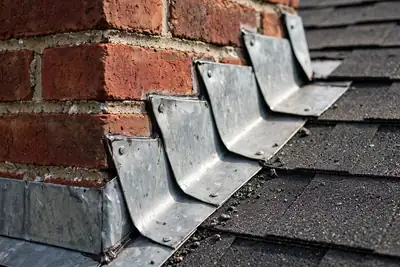
The roof's most metal-intensive joint — where waterfront corrosion typically shows first.
Flashing repair


Exposed ridge lines and active leaks — urgent response when the peak is open.
Emergency helpLoose caps, an exposed ridge, or rust working along the peak — call now to discuss ridge cap repair for your Weehawken home.
Call Now — (201) 330-4743Emergency calls answered 24/7.