Dormer leaks, ridge damage, flashing failures, storm damage — from the west-side neighborhoods to the waterfront. Local roofers, 24/7 emergency response, .
Emergency? We answer 24/7.

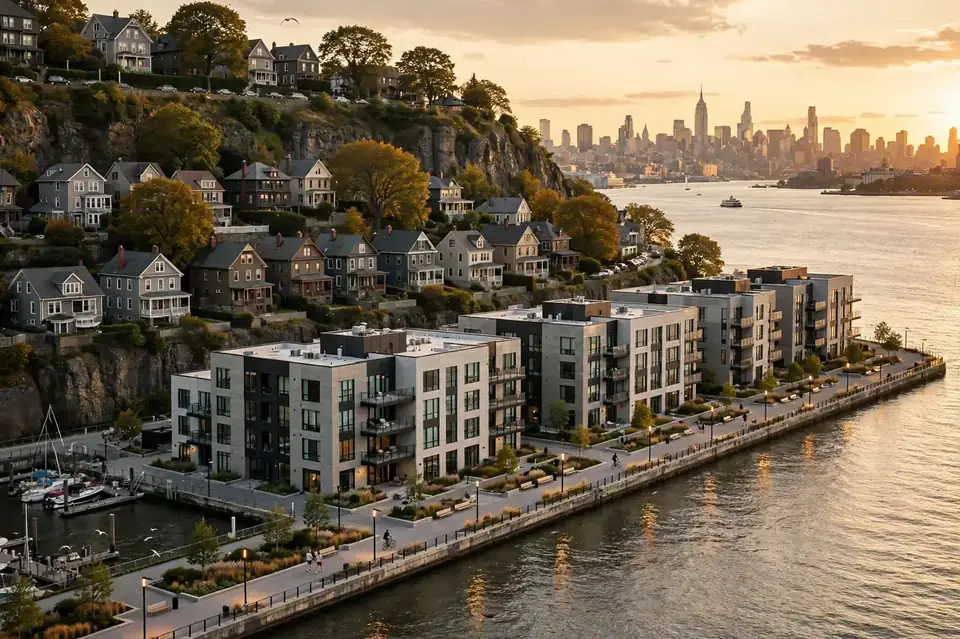
Weehawken is two towns in one roof market. Along the Hudson waterfront, mid-rise buildings face salt air off the river — and salt air is an accelerant for every metal component on a roof. West of the cliff, the capes and hillside homes deal with elevation wind and older roof vintages. The repair calls split accordingly: corrosion-driven flashing failures near the water, wind and age on the hill.
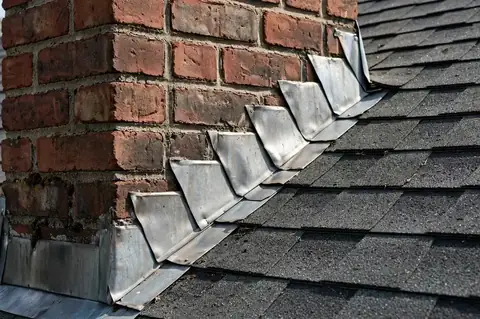
The waterfront factor deserves emphasis because it's invisible until it isn't. Salt-laden air doesn't announce itself — it quietly corrodes flashing, fasteners, and metal edge details years faster than the same components would last inland. A chimney flashing that would serve twenty years elsewhere can be failing in far fewer near the river. That's not a defect; it's chemistry. And it means inspection intervals near the waterfront should be shorter, because the failure curve is steeper.
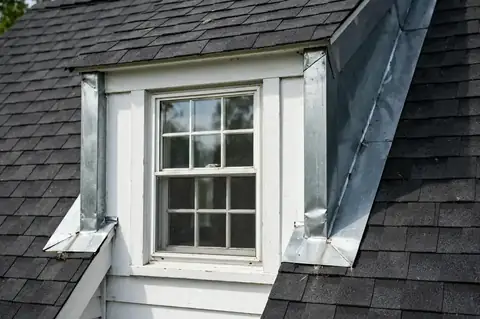
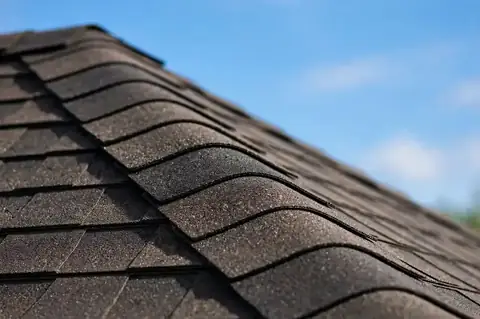
West-side retrofit dormers traced properly: we map the water's full path, then rebuild the entry joint.
Dormer repair →
Two roof worlds, one river wind — ridge caps on the capes, coping and edge metal on waterfront mid-rises.
Ridge cap repair →
Wind-rated joints for the river wind: laps and overlaps built for lateral rain, not just vertical.
Flashing repair →
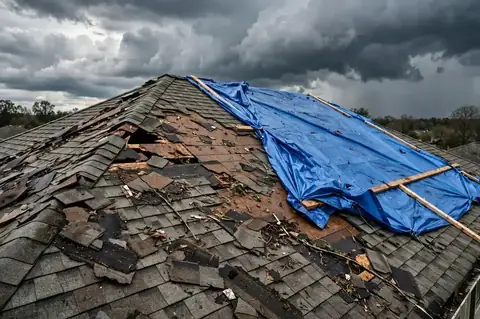
Water coming in during a storm? 24/7 emergency line with tarping that holds until the rebuild.
Emergency help →
River-wind damage needs evidence of cause, not just damage — our documentation covers both.
Storm guide →
Directly north — the West New York hub, plus Union City and the rest of the cluster.
West New York →is the waterfront's signature cause. Chlorides in the air attack exposed metal — flashing, drip edges, fasteners, gutter systems — through a steady electrochemical process that needs no storm to proceed. Galvanized steel goes first; aluminum holds longer; copper holds longest. When a waterfront flashing system was built with standard inland materials, its service life is simply shorter, and replacement with more resistant metals is the durable answer rather than repeated patching.
works the hillside: gusts off the river and over the cliff stress ridges, eaves, and every penetration on the west-side homes.
underlies both — the town's housing includes roofs deep into their service life, where sealant has hardened and the original detailing predates current standards.
When we connect you with a local roofer, the assessment should account for which Weehawken your building is in — waterfront or hillside — because the failure modes differ:
Near the water, ask the roofer to grade the metal: surface corrosion is a watch item, but pitting and section loss mean the flashing's structural life is ending.

Corrosion failure and wind failure look different and get different fixes — the roofer determines which force caused the breach before scoping anything.
The written scope names not just what gets fixed but what it's fixed with — because near salt air, the metal choice is half the repair.
Failed flashing is replaced (not just resealed), with compatible, appropriately resistant metals, correct lapping, and mechanical fastening.
The repair is confirmed, and you get straight talk on the remaining service life of adjacent metal of the same vintage.
Here's the honest tension on waterfront buildings: a single corroded flashing run is a repair, but if the whole flashing system is the same metal, the same age, and the same exposure, the other runs are on the same curve. A roofer who replaces one chimney flashing while the vent flashings are equally pitted should tell you so — not to upsell, but because you'll be calling again in a year.
The broader replacement conversation follows the same evidence rules as anywhere:
What changes near the water is the timeline — everything happens sooner — and a good assessment will factor that into the recommendation instead of treating the roof like it's inland.
Don't research — call. (201) 330-4743, 24/7. Corrosion breaches widen with every rain; tarping now holds the line.
Not all flashing metals are equal near salt water. Galvanized steel — the default on most roofs — has the shortest waterfront life; once the zinc coating is breached, the steel beneath goes quickly.
Aluminum resists salt better but is softer and needs careful fastening.
Copper is the long-term answer: it forms a protective patina and essentially stops corroding, which is why it outlasts everything else near the water — at a higher upfront cost.
Galvanic compatibility is non-negotiable: dissimilar metals in contact in a salt environment corrode aggressively at the joint. Every metal in the assembly — flashing, fasteners, drip edge — needs to be compatible, or the repair creates its own failure.
Roof work in Weehawken divides by geography.
— mid-rise buildings along the Hudson — deals with salt air corrosion as the primary accelerant: flashing, fasteners, and edge metals age faster, inspection intervals should be shorter, and material upgrades (aluminum or copper) pay back sooner.
— west-side capes and homes above the cliff — deals with wind exposure and older roof vintages: ridge damage, flashing separation, and the standard aging curve, without the salt multiplier.
A roofer who doesn't ask which side of the cliff you're on isn't diagnosing your roof. Make sure the assessment matches your exposure.
Mention your building's position — waterfront or hillside — because it changes the diagnostic lens. The roofer inspects with the right failure modes in mind, documents metal condition with photos, and scopes the fix with materials named explicitly.
Before authorizing: confirm the scope, the metals being used (and why), the hidden-damage protocol, and verification. Verify license and insurance yourself — the most important step, and always yours.
Salt air attacks the ridge's metal components too — check ridge cap repair in Weehawken if caps are lifting or corroding. Chimney flashing repair is the town's most frequent corrosion failure, and the page covers metal selection for waterfront exposure. Hillside dormers face wind-driven rain: dormer repair details the cheek-and-apron systems.
It damages the metal parts: flashing, fasteners, drip edges, and gutter systems. Chlorides accelerate corrosion through a steady electrochemical process — no storm required. Shingles themselves are less affected, but every metal transition on a waterfront roof ages faster.
More often than an inland one. Annual checks of flashing condition are reasonable near the water, because corrosion failures develop silently — by the time water shows inside, the metal has been failing for a while.
It costs more upfront and lasts dramatically longer — copper forms a protective patina and essentially stops corroding. On a waterfront building where galvanized flashing needs replacing every decade or so, copper is often the cheaper lifetime answer. Get the comparison in writing.
Far less. Hillside homes deal primarily with wind exposure and age — the standard failure modes. Salt is a waterfront problem; elevation wind is the hillside one. Your assessment should reflect your actual exposure.
Surface corrosion can sometimes be treated and monitored, but pitting and section loss mean the metal's structural life is ending — it needs replacement. A roofer should show you which condition yours is in rather than guessing.
Because they're metal, and metal is what salt air attacks. It's normal near the water for the metal systems to need attention well before the shingle field does — they're on different aging curves, and maintenance should follow each curve separately.
24/7 emergency line, roofers who know Hudson County.
Call (201) 330-4743