Dormer leaks, flashing failures, storm damage, tired ridges — from the Bergenline corridor to the west-side neighborhoods. Local roofers, 24/7 emergency response, .
Emergency? We answer 24/7.

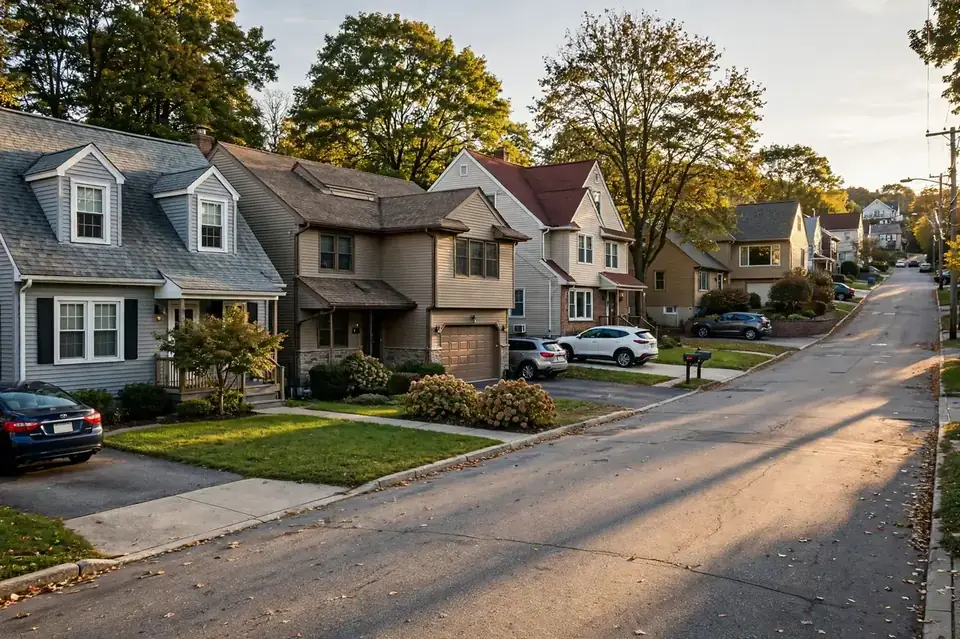
North Bergen sits high — some of the highest ground in Hudson County — and roofs up here take weather the lowland towns don't. Wind accelerates over the ridge, rain arrives with force behind it, and winter hits harder and stays longer. The housing is a genuine mix: capes and colonials on the residential streets, multi-family buildings and mixed-use blocks along the corridors, each with its own roof profile and its own failure patterns.
What that means in practice: the repair calls here skew toward wind and flashing. Ridge lines work loose, chimney flashing separates under thermal cycling, dormer transitions admit wind-driven rain. The roofs aren't worse than anywhere else — they're just tested more often. A roofer working in North Bergen should be thinking about exposure first: where the wind hits, where water gets driven, and which details on an older roof were never built for this much weather.
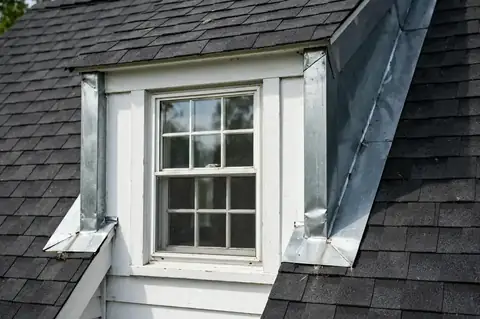
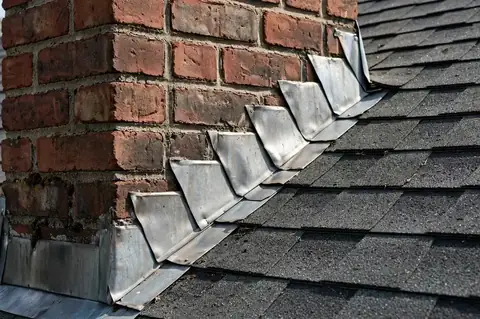
Our inspection-first approach: six-point dormer diagnosis that finds the real entry point before anyone quotes.
Dormer repair →
The honest triage — reseal when the metal is sound, rebuild when it isn't. Photos of the findings, both options quoted.
Flashing repair →
Free post-storm ridge inspections that catch the invisible damage: broken seals, proud nails, hairline cracks.
Ridge cap repair →
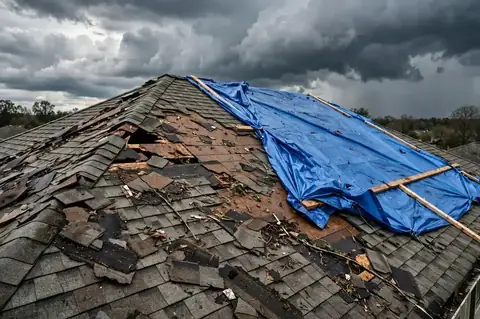
Active leak right now? 24/7 line, emergency tarping, and the full repair scheduled within days.
Emergency help →
Nor'easter aftermath service: full-roof inspection, timestamped photo documentation, claim-ready records.
Storm guide →
South of here — the Union City hub where the whole Hudson County cluster started.
Union City →When we connect you with a local roofer, the assessment should read the roof the way the weather reads it — from the most exposed lines inward:
On mixed housing stock, the assessment should also note the roof type — a cape's repair differs from a flat-roofed multi-family's, and the scope should reflect that.

The roofer identifies which lines the weather hits hardest on your specific roof — ridge, windward eave, chimney — and starts the trace there.
Attic evidence and surface inspection converge on the actual entry point, distinguishing the breach from where the water surfaced.
Failed flashing sequences, caps, or sections are rebuilt with correct lapping and fastening for exposure — not just re-secured, but re-detailed.
The repair is confirmed after real weather, not just a visual check. At elevation, the next storm is the test that counts.
A wind-damaged ridge on a sound roof is a repair. A separated chimney flashing is a repair. One dormer transition failing is a repair. The roof's age and the town's weather don't change that — what changes it is evidence.
Don't research — call. (201) 330-4743, 24/7. Hilltop leaks spread fast in wind; tarping now contains it.
Two facts shape roof work in this town. Elevation — among the highest ground in the county — means real wind exposure and harder winters: gusts accelerate over the ridge, rain arrives driven, and freeze-thaw cycles are more aggressive than in the lowlands. Mixed housing means no single roof profile dominates: capes with simple gables, multi-family buildings with flat sections, mixed-use blocks with penetrations everywhere. The assessment has to match the building — and a roofer who treats a flat-roofed multi-family like a cape is diagnosing the wrong roof.
The ridge takes the worst of hilltop wind — start with ridge cap repair in North Bergen after any storm. Chimney flashing repair addresses the freeze-thaw separation at brick lines, the town's most common slow leak. And dormer repair covers the cheek-and-apron transitions that wind-driven rain exploits.
Wind accelerates over elevated terrain, and it carries rain with it. That means higher uplift forces on ridges and eaves, and water arriving with pressure behind it — which defeats gravity-based shedding at flashing lines. Details that would survive for decades on a sheltered roof fail sooner up here.
An ice dam forms when heat escaping into the attic melts roof snow, which refreezes at the cold eave edge — the ice ridge then traps meltwater, which backs up under shingles. It's a ventilation and insulation problem that manifests as a roof leak. The fix addresses heat loss, not just the shingles.
Localized, documented failures are repairs. Systemic wear across whole slopes, repeated failures at repaired details, or rotted decking point to replacement. Insist on seeing the evidence — photos of the actual failures — before accepting either recommendation.
Often yes — they're different systems but the same visit. What matters is that each gets its own correct repair: membrane-compatible patching on the flat section, proper shingle integration on the pitched part. One scope, two techniques.
Wind direction and intensity determine whether water reaches the breach. A flashing gap on the windward side only admits water when the wind drives rain into it. That's diagnostically useful — tell the roofer which weather triggers it.
Freeze-thaw works the brick-to-roof joint silently for years before water shows inside. If the flashing is visibly separated, corroded, or held by sealant alone, it's a future leak — worth addressing before it becomes a current one.
24/7 emergency line, roofers who know both halves of town.
Call (201) 330-4743