24/7 Emergency Roof Repair — Union City, NJCall (201) 330-4743
Union City Roof Repair

Skylight Repair in Union City, NJ

Drips, fogging, failed seals — most skylight problems are repaired, not replaced. Local roofers diagnose the real cause and fix it.

  • Same-day skylight repair service in Union City
  • No obligation
  • Local Union City roofers
Call (201) 330-4743

Emergency? We answer 24/7.

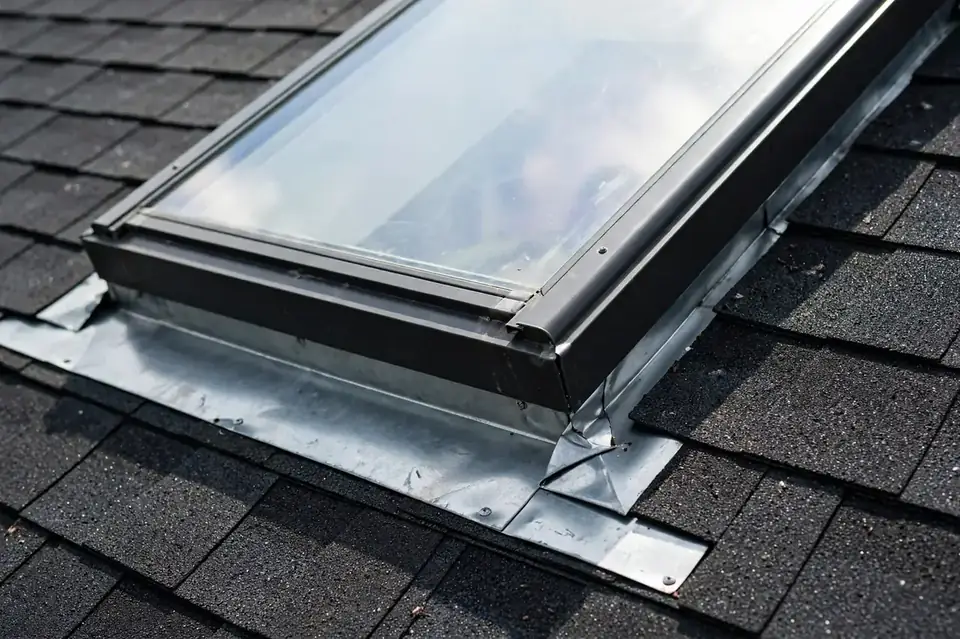
Skylight on a residential roof in Union City NJ

Why Skylights Leak — and Why It's Not Always the Skylight

A skylight is a window installed in your roof plane, which means it lives in the harshest spot on the house: full sun, full rain, full wind, and every freeze-thaw cycle — while being expected to stay watertight like a wall window. Most skylights are one of two types. Curb-mounted units sit on a raised wooden frame (the curb) built up from the roof deck. Deck-mounted units sit lower, closer to the roof surface, with a slimmer profile. Both rely on a flashing kit — step flashing up the sides, head flashing across the top, sill flashing at the bottom — to marry the unit to the roofing.

Here's the diagnostic insight that matters: most "skylight leaks" aren't the skylight at all. Water appearing under a skylight comes from three distinct sources — failed flashing around the unit, failed seals within the unit (fogging between panes), or condensation forming on cold glass in winter and dripping like a leak. Each has a different fix and a different cost. A roofer's first job is figuring out which one you're dealing with, because replacing a skylight for a flashing problem — or flashing a skylight with failed seals — wastes your money.

Signs your skylight needs attention

  • Drips during rain — active dripping from the frame or surrounding drywall means water is getting past the flashing or the unit.
  • Fogging between the panes — condensation trapped inside double-pane glass means the seal has failed. This won't dry out on its own.
  • Stained drywall around the shaft — brown rings on the ceiling or the skylight's light shaft point to chronic water entry.
  • Cracked or hazed glazing — impact damage or UV-degraded plastic domes that have gone brittle and yellow.
  • Daylight visible around the frame — gaps between the skylight frame and the curb or roof deck.
  • Winter "leaks" that aren't rain — dripping on cold mornings with no precipitation is condensation, not a leak — but it still needs addressing.

What Causes Skylight Problems

  • Flashing failure is the most common cause of true skylight leaks: step flashing corrodes or pulls away, sealant at the head flashing cracks, or the original installer skipped the manufacturer's flashing kit and improvised with caulk.
  • Seal failure is the most common cause of fogged glass — the perimeter seal on insulated glass units breaks down over time (faster with thermal cycling), letting moist air between the panes.
  • Glazing damage comes from hail, falling branches, or simple UV aging of plastic domes.
  • Low curb height is an installation defect: curbs shorter than the surrounding roofing and snow load let water overtop the flashing in heavy rain. And
  • condensation isn't a defect at all — it's physics: warm moist indoor air hitting cold glass. It still needs managing, because chronic condensation rots the surrounding woodwork.

What a Roofer Checks on Your Skylight

Because the fix depends entirely on the diagnosis, the inspection is methodical. When we connect you with a local roofer, expect this:

  • Flashing kit condition — step, head, and sill flashing checked for corrosion, displacement, and proper integration with the roofing.
  • Glass seals — fogging between panes, which confirms seal failure versus a flashing leak.
  • Glazing condition — cracks, hazing, or brittleness in the glass or dome.
  • Curb integrity — the wooden curb checked for rot, and its height measured against the roofing profile.
  • Weep holes — the small drainage channels in the frame, which clog with debris and trap water.
  • Interior shaft — the drywall tunnel below the skylight, checked for staining patterns that reveal where water travels.
  • Condensation vs. leak test — the roofer distinguishes moisture patterns: condensation forms evenly and correlates with cold weather; leaks correlate with rain.

How Skylight Repair Is Performed

1

Diagnose the source

The roofer determines whether you're dealing with flashing failure, seal failure, glazing damage, or condensation. This diagnosis drives everything — each problem has a different repair.

2

Address the flashing

For flashing leaks, surrounding roofing is lifted and the old flashing kit is replaced with the manufacturer's proper kit — step flashing woven into the courses, new head and sill flashing, fresh sealant at the transitions.

3

Repair or replace the unit

Fogged or cracked units get replaced — the glazing assembly, not necessarily the curb or flashing if those are sound. A new unit drops into the existing curb in most cases.

4

Test and finish

The assembly is water-tested, weep holes cleared, and the interior shaft checked. The roofer confirms whether the issue was leak or condensation so you know what was actually fixed.

Reflash or Replace the Skylight?

  • This is the central question, and the answer follows the diagnosis. Reflash when the unit itself is sound — clear glass, intact seals — but water is getting around it. A proper flashing-kit replacement solves the majority of true skylight leaks and costs far less than a new unit.
  • Replace the unit when the seals have failed (fogged glass never clears), the glazing is cracked or UV-degraded, or the frame itself is rotted. There's no repair for a failed insulated-glass seal — the glazing assembly must be replaced. The good news: the curb and often the flashing can stay, so it's a unit swap, not a full rebuild.
  • Neither — when it's condensation. Adding ventilation, improving the shaft insulation, or managing indoor humidity addresses the physics. A roofer who diagnoses condensation and still sells you a new skylight isn't doing you a favor.

Skylight Components, in Plain Language

  • A flashing kit is the manufacturer-made set of metal pieces designed for a specific skylight model — step flashing for the sides, head flashing for the top, sill or apron flashing for the bottom. Kits beat improvised flashing because the pieces are shaped for the unit.
  • Insulated glass (double-pane) has a sealed air space between panes for insulation; when the
  • perimeter seal fails, moisture enters and the glass fogs permanently. The
  • curb is the raised wood frame the skylight sits on — it must stand taller than the surrounding roofing to keep water from overtopping it.
  • Weep holes are small drainage slots in the frame that let incidental water escape; when they clog, water backs up into the unit.
  • Butyl tape is the sticky, long-lasting sealant used at flashing transitions — far more durable than tube caulk in these locations.
Union City NJ homes where additions and dormers often hold skylights
Union City, NJ — skylights cluster on additions and dormers.

Skylights in Union City Homes

What to Expect When You Call

Describe what you're seeing and when: drips during rain, fogging between panes, stains around the shaft, or winter-only moisture. Note whether the skylight is on a flat or sloped section — it changes the diagnosis. A local roofer will inspect the flashing, the seals, and the curb, tell you whether it's a leak or condensation, and scope the fix accordingly.

  • Ask: is this the flashing, the seals, or condensation?
  • Can the unit be saved, or does the glazing need replacement? And
  • is the curb sound and tall enough? If the answer to the first question is vague, get a second opinion before authorizing a full replacement.

Skylight actively dripping?

Call (201) 330-4743 — 24/7. A roofer can weatherproof the unit to stop the water now and diagnose the permanent fix after.

What Affects the Cost of Skylight Repair?

  • The diagnosis is the biggest cost driver: a flashing-kit replacement and a full unit replacement are different jobs at different scales.
  • Unit size and type matter — larger skylights and vented (opening) models cost more to replace than small fixed ones.
  • Roof pitch and access affect labor, especially on steep slopes.
  • Curb condition — a rotted curb that needs rebuilding adds carpentry to a roofing job.
  • Interior damage to the shaft drywall is a separate repair. And
  • how many skylights need attention: once a roofer is set up, additional units on the same visit cost less per unit. Only an on-site inspection can scope it.

Leaks That Mimic Skylight Leaks

Skylight FAQ

How can I tell if my skylight is leaking or just condensing?

Timing is the tell. Leaks correlate with rain — water appears during or right after precipitation. Condensation appears on cold mornings with no rain, forms evenly across the glass, and correlates with indoor humidity. A roofer confirms it by examining moisture patterns and the flashing condition.

Can a skylight be repaired, or does it need to be replaced?

Both are common, and the diagnosis decides. Flashing leaks are repaired with a new flashing kit while keeping the unit. Fogged glass (failed seals) or cracked glazing means the glazing assembly must be replaced — though the curb and often the flashing can stay.

My skylight glass is foggy between the panes. Will it clear up?

No. Fogging between panes means the perimeter seal has failed and moist air is trapped inside. It won't dry out on its own, and there's no repair for the seal — the glazing assembly needs replacement.

Can you replace just the glass and keep the frame?

In most cases, yes — the glazing assembly (glass plus its frame) is replaced as a unit and drops into the existing curb. A full tear-out including the curb is only needed if the curb is rotted or undersized.

What factors affect the cost of skylight repair?

Whether it's a flashing repair or a unit replacement, the skylight's size and type (fixed versus vented), roof pitch and access, curb condition, any interior shaft damage, and how many skylights need work. The diagnosis has to come first.

Should I replace all my skylights if one is failing?

Not necessarily — but it's worth having the others inspected while the roofer is there. Skylights installed at the same time age together, and the marginal cost of addressing a second marginal unit during the same visit is lower than a separate trip later.

Skylight Dripping? Get the Real Diagnosis.

Most skylights repaired same-visit — no replacement upsell.

Call (201) 330-4743

← Back to Roof Repair in Union City

Call (201) 330-4743 — 24/7