24/7 Emergency Roof Repair — Weehawken, NJCall (201) 330-4743
Union City Roof Repair

Chimney Flashing Repair in Weehawken, NJ

In calm rain your chimney is dry. In a nor'easter, it leaks. That's wind-driven rain defeating flashing that was built for gravity — Weehawken's river wind demands better joints.

  • Same-day chimney flashing repair service in Weehawken
  • No obligation
  • Local Weehawken roofers
Call (201) 330-4743

Emergency? We answer 24/7.

Chimney flashing repair Weehawken NJ

The Roof's Most Metal-Intensive Joint Meets Salt Air

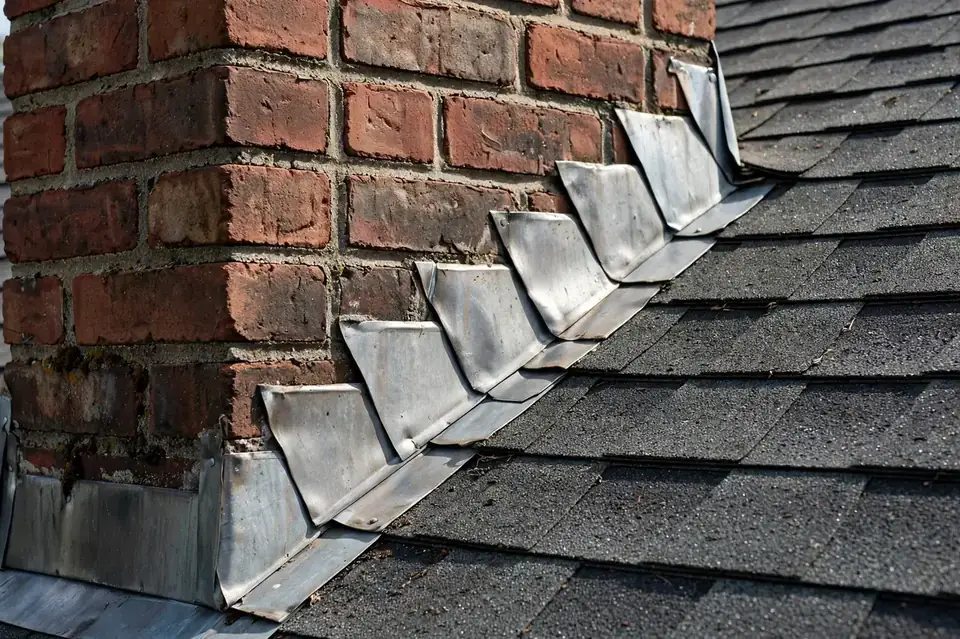
A masonry chimney breaks through the roof slope, and the joint where brick meets shingles is sealed by a two-layer metal system: step flashing — L-shaped pieces woven into the shingle courses up both sides — and counter-flashing, metal embedded into the chimney's mortar joints and folded down over the step layer. An apron spans the downhill base; wide chimneys get a cricket, a diverter splitting water around both flanks.

It's the most metal-intensive detail on the roof — and in Weehawken, that's the problem. Every piece sits in salt-laden Hudson air, a corrosion accelerant: zinc coatings consumed, aluminum pitted, fasteners rusted, every metal-to-metal contact a galvanic cell. A flashing assembly that would age gracefully inland can corrode through years early near the river — largely out of sight, until rust streaks appear.

Signs of Salt-Air Flashing Failure

One distinction matters: a leaking chimney isn't always flashing. Cracked crowns and deteriorated mortar admit water too — and near the water, mortar suffers its own salt and freeze-thaw damage. The inspection must separate the two; they call for different work.

How Salt Air Destroys Chimney Flashing

  • Accelerated corrosion is the headline cause: salt deposits on flashing metal, and every wet-dry cycle drives the chemistry — zinc sacrifices itself, then steel pits and perforates.
  • Galvanic corrosion multiplies it wherever dissimilar metals meet.
  • Fastener failure often comes first: nail heads rust and the hold loosens.
  • Sealant breakdown admits salt water to the most vulnerable edges.
  • Mortar deterioration releases the counter-flashing's embedment.
  • Wind-driven rain pushes water sideways into every weakened point. Inland, flashing fails by age. Here, it fails by chemistry.

What a Roofer Examines at a Waterfront Chimney

The replacement metal's specification is decided here — ask what the roofer recommends for the exposure and why.

How Chimney Flashing Repair Is Performed

1

Expose the joint

Shingles around the chimney base are lifted to expose the step flashing run; counter-flashing is released from its mortar joints for full assessment.

2

Replace with suitable metal

Corroded step flashing is replaced piece by piece, woven with the shingle courses; the cricket is rebuilt — metal and fasteners specified for salt air.

3

Reset the armor

New counter-flashing is embedded into reground mortar joints — never face-nailed — folded over the step layer, dissimilar metals isolated.

4

Reintegrate and verify

Shingles re-laid over the new step flashing, joints repointed where opened, brick line sealed, and the full chimney base water-tested.

Re-seal, re-flash, or go further?

Sound metal, failed sealant: a cut-out and re-seal is the most economical honest fix.

Pitted or perforated metal: the joint needs re-flashing.

Mortar too deteriorated to grip new flashing: repointing joins the scope.

Cracked crown or masonry as the source: that's masonry work alongside or instead.

Sealant over corroded metal is a patch you pay for twice.

Specifying Metal for the Hudson Waterfront

This section sets the repair's lifespan.

Galvanized steel

is the economical default, but salt air consumes its zinc coating first — the shortest-lived honest option near the river.

Aluminum

resists salt far better, the standard waterfront upgrade — with one iron rule: never touch steel, copper, or old galvanized remnants, or galvanic corrosion takes it instead.

Copper

shrugs off salt air for generations, at a matching price.

Stainless steel fasteners

are non-negotiable: standard nails rust, loosen, and let the flashing go slack. "What metal, what fasteners, how are dissimilar metals isolated" — the three questions separating a lasting repair from a repeat visit.

Roof repair Weehawken NJ
Weehawken, NJ — waterfront air works on every metal joint.

The Chimney Is Where Salt Air Shows First

Of all the roof's metal details, chimney flashing packs the most metal into the most concentrated joint — which is why it's typically where Weehawken's salt air shows its work first. Hudson salt-laden air reaches every roof in town, strongest on eastern exposures, present everywhere, attacking coatings, fasteners, and metal-to-metal contacts at once. Mid-rise buildings put many chimneys stories up, where inspection and work account for height; west-side capes carry older masonry chimneys weathered by decades of freeze-thaw alongside the salt. Either way: metal specified for the exposure, fasteners to match, no mixed metals left touching.

What to Expect When You Call

We'll connect you with a local roofer experienced in chimney flashing work. Mention where staining appears relative to the chimney, any visible rust streaks, and whether the flashing has been sealed before. Expect a roof-level inspection of flashing, mortar joints, and crown, plus a look at the interior water path. Before authorizing, ask for the metal and fastener specification and whether counter-flashing will be re-embedded.

Active leak at the chimney?

Water at the chimney base keeps working while you decide. Call (201) 330-4743 — 24/7. A roofer can weatherproof the joint to stop active intrusion while the full re-flash is scheduled.

What Affects the Cost of Chimney Flashing Repair?

Weehawken Chimney FAQ

Why is my chimney flashing failing when the roof is relatively new?

Near the Hudson, flashing fails by chemistry, not age. Salt air corrodes flashing metals and fasteners far faster than inland exposure — an assembly can perforate while surrounding shingles still look fine. The answer is metal specified for the exposure, not a defect in the roof.

What's the white powder on my flashing?

Usually oxidation — the protective coating breaking down under salt exposure. The stage before rust: coating failing, base metal possibly still sound. The right moment for an inspection — catching it here can mean a re-seal instead of a re-flash later.

Can old and new flashing metals be mixed?

Only with proper isolation. Dissimilar metals in contact in salt air form a galvanic cell, and the less noble metal corrodes rapidly. New metal lapped over old without separation builds in its own failure.

Is the leak the flashing or the chimney masonry?

Both are suspects — flashing corrodes and mortar deteriorates, sometimes together. The distinction is made on the roof. Fixing the wrong one doesn't stop the leak.

Why do stainless fasteners matter so much?

Fasteners are the smallest metal in the assembly and the first to corrode in salt air — and flashing held by rusted nails isn't held. Stainless removes the weakest link for little cost.

Built for Calm Rain? Rebuild for the Nor'easter.

roofers who know river wind.

Call (201) 330-4743

← Back to Roof Repair in Weehawken

Call (201) 330-4743 — 24/7