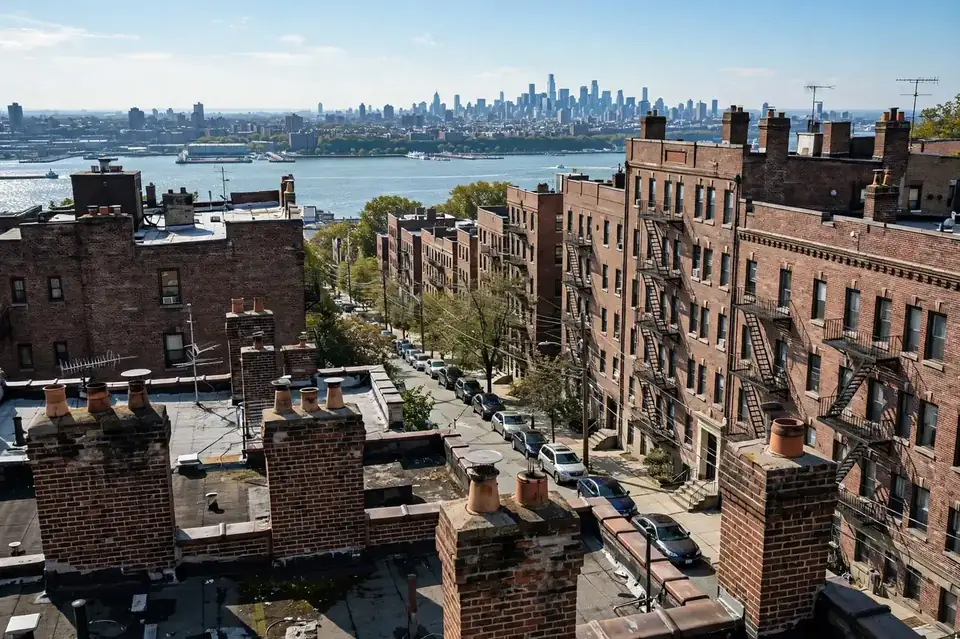
West New York sits on top of the Palisades — and storms hitting the cliff accelerate straight at your ridgeline. We rebuild caps to hold in the wind these blocks actually get.
Emergency? We answer 24/7.

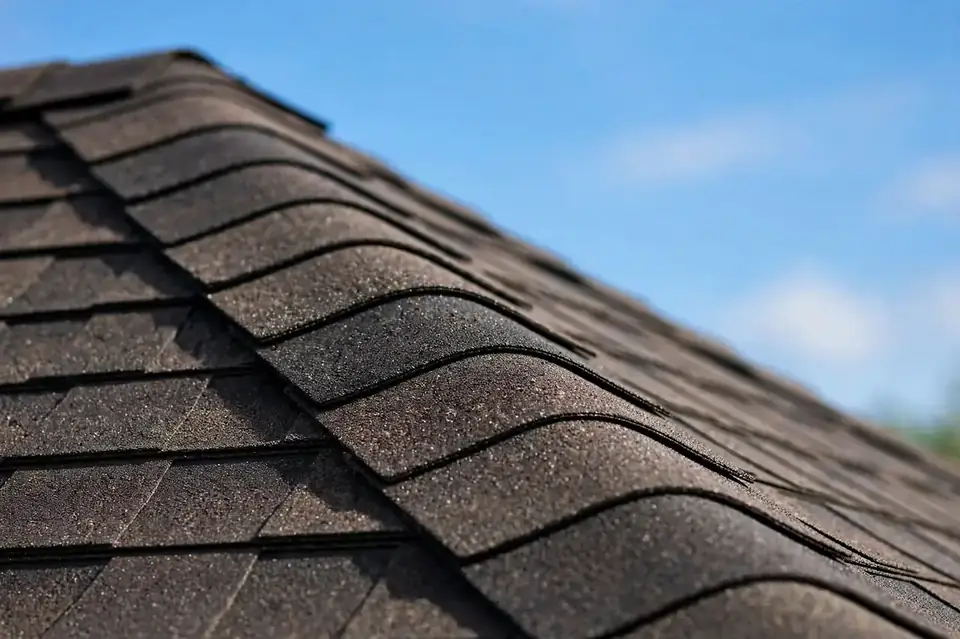
The ridge cap — folded shingles along the peak where the two slopes meet — takes wind edge-on from both sides at once. Slopes shed wind; the ridge absorbs it. That makes the peak the first thing to fail in a gust front and the worst place to be exposed: it's the highest point, so every subsequent rain enters the roof system directly — straight down the ridge line into the attic.
The failure pattern is fast and familiar: one cap's seal breaks in the first gust, the lifted edge catches the next gust like a sail, and takes its neighbors with it. By morning the clean peak line shows gaps — each an open joint at the roof's most vulnerable point. In West New York this runs quicker than on sheltered streets: the elevated Palisades position means stronger, steadier wind than lower-lying blocks feel.
Wind exposure is the headline cause, and West New York's Palisades elevation is why it matters more here: higher ground catches stronger, less obstructed wind — the same storm that rattles a sheltered roof can peel caps off an exposed ridge. Age compounds it: sealant strips bonding each cap dry out over years of thermal cycling, so a ridge that survived a decade of storms can let go in an ordinary gust.
Installation details decide how much wind a ridge can take: nails driven too high miss the course below and hold only the cap itself. Caps cut from field shingles lack the thickness and seal of proper hip-and-ridge pieces. And ridge vent problems interact — a damaged vent at the peak is both a leak path and a weak point the wind exploits.
Loose, cracked, and missing caps come off, back to sound material — no layering new over failed.
The ridge vent and underlayment underneath are checked; a repair that ignores a crushed vent just moves the leak.
Proper hip-and-ridge pieces go on with correct nail placement — through the cap and the course below — and sealed to current wind standards.
Timestamped before-and-after photos of every wind-damaged cap, for your records and any insurance conversation.
Spot cap replacement fits when the vent and underlayment beneath are sound — wind took the caps, the structure held. A full ridge rebuild enters when the vent is crushed or the peak underlayment is weathered through; new caps alone would just cover a continuing leak. And if surrounding field shingles are also at end of life — brittle, granule-bare — a roofer should say so rather than selling a pristine ridge on a failing roof.

Proper hip-and-ridge shingles are pre-cut, thicker pieces designed for the peak — they fold cleanly and carry full sealant strips. Caps cut from field shingles are a common shortcut: thinner, partial seals, measurably less wind-resistant. On an exposed ridge the difference matters. Nail placement is the other half — each nail must catch both cap and course beneath; high nailing that catches only the cap is a leading cause of blow-offs.
The ridge vent works with the caps, not separately: it exhausts attic heat and moisture but must be integrated with the cap installation. A vent separated from its caps is both a leak and a sail — its condition should be assessed in the same scope, not discovered later.
Two local facts shape ridge work here. The elevated Palisades location means genuinely higher wind exposure — wind-rated details (proper caps, correct nailing, sealed bonds) aren't upgrades here, they're the baseline. And the town's dense pre-war building stock means many ridges are simply old: original caps past service life, sealant long dried out, generations of patchwork. On these roofs the ridge was often already marginal before the last storm finished it.
An open peak doesn't wait for the next forecast. Call (201) 330-4743 — we connect West New York homeowners with local roofers, 24/7 for emergencies.
Describe what you see from the ground — missing caps, crooked sections, granules in gutters — and when you noticed it (after which storm). The roofer will inspect from the roof itself, since ridge condition can't be judged from the street, and will usually check the attic for daylight and staining along the peak.
Ridge cap replacement is typically fast — often a single visit — since the work area is one line, not a whole slope. Ask whether the quote includes the ridge vent assessment and whether you'll receive photo documentation; timestamped before-and-after photos turn a repair into a usable record.
Wind that takes ridge caps usually stresses chimney flashing in West New York too — the roof's two most exposed features, worth checking in one visit. Dormer repair belongs in the same conversation on pre-war buildings, where cheeks and ridges share the same vintage and storms. And the West New York roof repair hub frames any ridge problem in full-roof context.
From the ground: a peak line that isn't straight — crooked, lifted, or missing caps — plus granule piles in gutters after wind. From inside: daylight visible along the ridge in the attic. In high wind, a loose cap flaps audibly before it's visible.
Not through another storm. The ridge is the roof's highest point, so any breach admits rain directly into the roof system with no slope to shed it — and wind damage spreads: one lifted cap becomes several missing caps fast, especially with West New York's elevated exposure.
The town's elevated Palisades position means stronger, less obstructed wind reaches these roofs than lower-lying streets nearby — which is why wind-rated installation details matter more here, not less.
Hip-and-ridge caps come in standard colors matched to major shingle lines, so close matches are the norm. On much older roofs with discontinued shingle colors, an exact match may not exist — a roofer should tell you that before the work, not after.
Only if it needs it — but it should always be assessed as part of the job. A crushed or separated vent is both a leak path and a wind weak point, and capping over a failed vent just hides the problem. Ask that the vent's condition be included in the inspection.
roofers who build for the crest.
Call (201) 330-4743← Back to Roof Repair in West New York · Ridge cap repair in North Bergen →