24/7 Emergency Roof Repair — Secaucus, NJCall (201) 330-4743
Union City Roof Repair

Chimney Flashing Repair in Secaucus, NJ

Every winter, freeze-thaw pries Secaucus chimney flashing a fraction wider. Every March, the leaks arrive on schedule. We rebuild the joints before the spring rains.

  • Same-day chimney flashing repair service in Secaucus
  • No obligation
  • Local Secaucus roofers
Call (201) 330-4743

Emergency? We answer 24/7.

Chimney flashing repair Secaucus NJ

What Chimney Flashing Actually Does

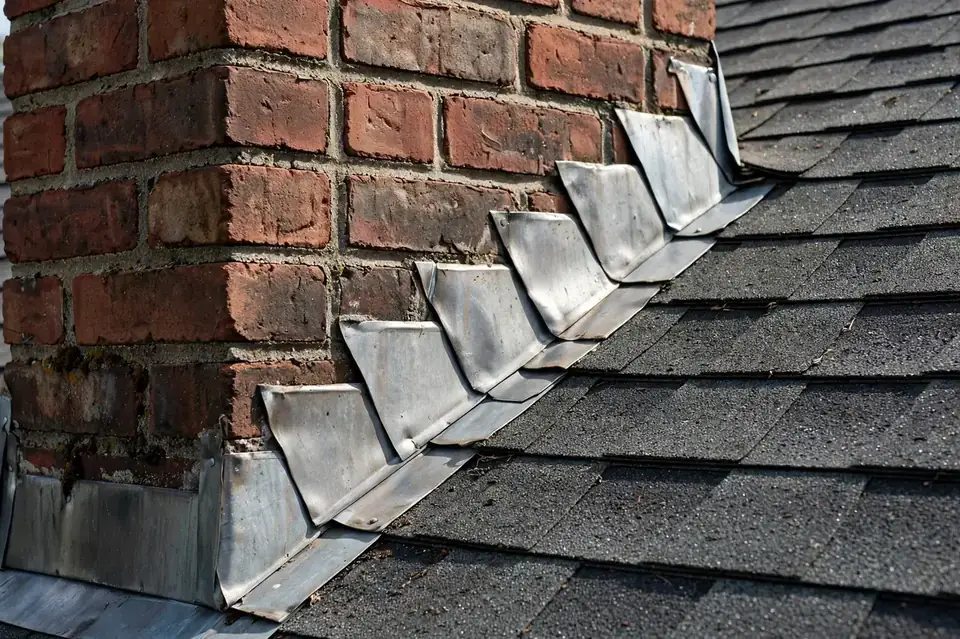
A chimney is the largest hole in your roof, and flashing is what keeps that hole from becoming a funnel. Chimney flashing is really two systems working as one: step flashing — small L-shaped metal pieces woven between each shingle course up both sides of the chimney — and counter-flashing, a second layer of metal set into the chimney's mortar joints and folded down over the step flashing. Rain running down the brick hits the counter-flashing, sheds onto the step flashing, and lands back on the shingles. When either layer fails, water has a direct path into the roof deck.

Failure rarely announces itself at the chimney: water travels along decking and framing before surfacing — often as a ceiling stain away from the fireplace. That's why flashing deserves its own inspection, not treatment as a shingle-work afterthought.

Signs your chimney flashing is failing

  • Rust streaks on the chimney — orange-brown staining running down the brick means the metal is corroding.
  • Ceiling stains near the fireplace or chimney breast — even a faint discoloration is worth checking.
  • Damp or musty smell in the attic, strongest near the chimney.
  • Cracked or missing mortar where the counter-flashing enters the joints.
  • Visible gaps between the flashing and the brick, or flashing pulling away.
  • Shingles lifting or curling around the base of the chimney.

What Breaks Chimney Flashing Down

Metal flashing degrades through specific mechanisms — and which one you're dealing with determines whether a reseal will hold or a rebuild is needed.

Freeze-thaw cycling is the main enemy in North Jersey. Water works into the mortar joints, freezes, expands, and gradually loosens the counter-flashing's grip. After enough winters, the metal can walk right out of the joint. Corrosion follows: once the protective coating on galvanized steel wears through, rust starts, and rusted flashing can't be resealed — it has to be replaced. Sealant aging is the quieter failure — the caulk or sealant lines along the top edge dry out, crack, and shrink under UV and heat, opening a hairline path for water.

The most common installation defect is the caulk-only shortcut: a bead of sealant where metal meets brick, with no counter-flashing cut into the joints behind it. It holds for a season or two, then lets go. Chimney settling — masonry and framing moving at different rates — cracks rigid seals over time.

What a roofer examines

  • Counter-flashing engagement — is the metal still locked into the mortar joints, or has it pulled free?
  • Step flashing condition — exposed by lifting shingles at the chimney sides; checked for rust-through and proper overlap.
  • Mortar joint integrity — crumbling joints can't hold flashing, and repointing may need to come first.
  • Cricket or saddle — the peaked diverter behind wide chimneys; its absence on a chimney wider than about 30 inches is a red flag.
  • Attic-side evidence — water staining on sheathing and framing near the chimney, which maps the leak's path.

How Chimney Flashing Repair Is Performed

1

Expose the joint

Shingles around the chimney sides are carefully removed to reveal the full run of step flashing — no guessing at what's underneath.

2

Replace the step flashing

New L-shaped pieces are woven in course by course with the shingles, each overlapping the one below so water always sheds outward.

3

Reset the counter-flashing

New counter-flashing is cut into the mortar joints (a reglet) and sealed — mechanically locked in, not just caulked to the brick face.

4

Re-shingle and verify

Shingles are reinstalled over the new flashing, and the whole assembly is checked for a continuous water-shedding path.

Repair vs. replacement: where the line is

A sealant refresh on sound, firmly seated metal is legitimate maintenance. But sealant over rusted-through metal or dislodged counter-flashing buys months, not years — a roofer should show you which situation you're in, and be wary of anyone proposing caulk as the whole solution without exposing what's underneath.

Flashing Materials and Details Worth Knowing

Roof repair Secaucus NJ
Secaucus, NJ — neighborhood roofs like yours.

Most residential chimney flashing is galvanized steel — affordable and sturdy until its coating wears. Aluminum won't rust but dents easily. Copper lasts longest and develops a patina, at higher material and labor cost. The choice is a budget-versus-lifespan trade-off.

Two terms worth knowing: a reglet is the groove cut into the mortar joint that locks counter-flashing in place — what separates a proper job from a caulk-only shortcut. A cricket is a small peaked diverter behind a wide chimney; if yours lacks one, adding it during the rebuild is worth discussing.

Secaucus specifics

Secaucus's garden-apartment and townhome buildings are typically run by HOAs, and chimneys on these shared buildings sit in a gray area homeowners should sort out early: in most local CC&Rs the association owns everything outside the drywall — including the chimney flashing — while the unit owner owns the stained ceiling inside. If you see a stain, document it and raise it with the association before authorizing work, since the repair bill may not be yours.

Warehouse and industrial roofs along the Turnpike corridor use different flashing systems entirely — mention it when you call if your building is mixed-use or commercial.

Water coming in around the chimney now?

Don't wait for the next storm to confirm it. Call (201) 330-4743 — we connect Secaucus homeowners with local roofers, 24/7 for emergencies.

What to Expect When You Call

Have a few details ready: where the stain shows up, whether it appears in every rain or only wind-driven ones, and whether you have attic access near the chimney. The roofer will check both sides — the stain's location and the breach's location are often different.

The inspection sets the scope — sealant refresh, partial rebuild, or full replacement — plus whether mortar needs repointing first. Ask for the quote to name each element (step flashing, counter-flashing, surrounding shingles), not just "fix chimney leak." Most standard jobs finish in a single visit.

What affects the cost of chimney flashing repair

  • Scope of metalwork — a sealant refresh vs. full step-and-counter replacement are very different jobs.
  • Chimney height and roof access — steep pitches and tall chimneys mean more setup time and safety equipment.
  • Masonry condition — deteriorated mortar joints that need repointing add a separate trade to the project.
  • Cricket — adding one where none exists is extra carpentry and flashing work.
  • Shingle replacement — brittle or discontinued shingles around the base can complicate reinstallation.

Related services worth checking

Chimney flashing rarely fails in isolation. On a tile roof, the flashing needs custom-bent metal to follow the tile profile — the two jobs pair naturally in one visit. A full Secaucus roof assessment makes sense after a long-active leak, since surrounding decking may be affected. And dormer repair uses the same step-flashing craft at the cheeks — addressing both together saves a second mobilization.

Secaucus Chimney FAQ

Can chimney flashing be repaired, or does it always need replacing?

It depends on the metal's condition. If the step and counter-flashing are solid and still seated, a sealant refresh is legitimate maintenance. If the metal is rusted through, or the counter-flashing has pulled out of its mortar joints, replacement is the only durable fix — sealant over failed metal just buys time.

Why does it only leak during heavy or wind-driven rain?

Light rain may not reach the failed joint with enough volume to penetrate, while wind-driven rain is pushed sideways directly into gaps around the flashing. Intermittent leaking is still leaking — the joint is compromised and will worsen.

Is a bead of caulk enough to fix it?

As the entire repair, no — not for long. Sealant is a component of a proper flashing assembly, not a substitute for one. A caulk-only fix over failed metal typically lasts a season or two before letting go.

How long does chimney flashing last?

Often as long as the surrounding roof — but sealant lines need periodic renewal and freeze-thaw works the mortar joints every winter. Any specific answer comes from inspection, not a timetable.

What is a cricket, and does my chimney need one?

A small peaked diverter built behind a wide chimney so water flows around it instead of ponding against the brick. Chimneys wider than about 30 inches generally should have one.

Beat the March Rush. Inspect in February.

Triage now, rebuild before spring.

Call (201) 330-4743

← Back to Roof Repair in Secaucus · Chimney flashing in West New York →

Call (201) 330-4743 — 24/7