Hudson County winters average around 30 inches of snow, and the freeze-thaw cycle works roofs hard from December through March. When ice dams push water under shingles or heavy snow loads a flat roof, a winter roof problem becomes an emergency fast — call to discuss what is happening on your roof.
Emergency calls answered 24/7.

Winter damages roofs in specific ways — and each type of damage has a specific response:
Meltwater backing up under shingles at the eaves is traced to its entry point. Interior damage is contained, and the roof is detailed so the next thaw doesn't repeat the leak.
Heavy snow stresses flat and low-slope roofs. Deflection, stressed seams, and ponding patterns are checked — on Union City's rowhouse blocks, shared rooflines spread the risk across units.
Snow and ice choke scuppers and interior drains; meltwater with nowhere to go becomes ponding over seams. Drains are cleared and flow restored before the next thaw.
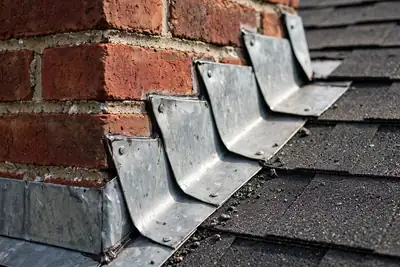
Constant cycling across freezing splits old mortar and works flashing joints loose — especially on pre-war chimneys and parapets. Damaged step and counter flashing is rebuilt, course by course. Chimney flashing repair →
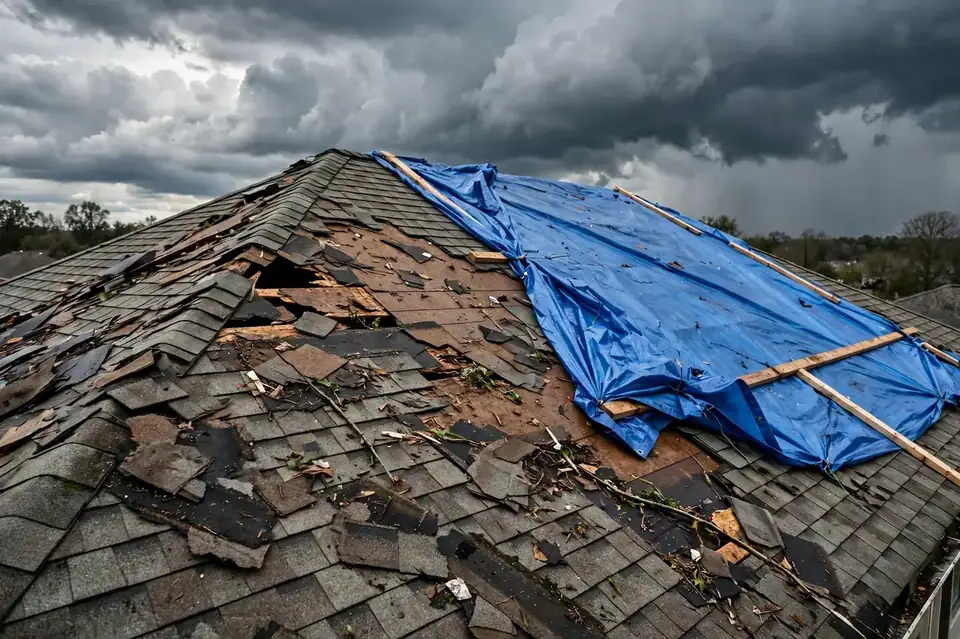
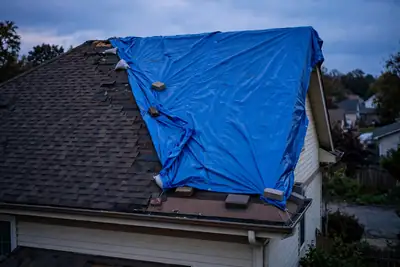
When water is coming in during a thaw, temporary covering stops the intrusion now — holding the line until permanent repairs are scheduled.
Ice dams start with heat loss. Ventilation and insulation gaps that feed the freeze-thaw cycle at the eaves are identified, so the problem doesn't return every winter.
After heavy snow or a mid-winter thaw, check these — from the ground, never by climbing an icy roof:
Stay off an icy or snow-loaded roof. Document what you can see from a safe location and keep clear of the drip line under heavy icicles.
Heavy icicles and a visible ice ridge along the gutter line. What it may indicate: meltwater refreezing at the eaves — the classic ice dam setup. Next step: if interior stains appear, water is already backing up under the shingles.
New ceiling stains as snow starts melting. What it may indicate: an ice dam forcing water uphill under the roofing. Next step: contain the interior drip and call — this won't fix itself at the next freeze.
A visible dip or uneven snowmelt pattern on a flat section. What it may indicate: snow load stressing the structure or ponding underneath. Next step: keep clear below and arrange an assessment — this is a safety issue first.
Water spilling over gutters in a thaw, or gutters pulling away from the fascia. What it may indicate: ice-blocked drainage. Next step: blocked drainage turns every thaw into a ponding event over the seams.
Cracks or separation at chimneys, walls, or skylights after cold snaps. What it may indicate: freeze-thaw working the joints. Next step: each gap is a direct water path in the next rain-on-snow event.
Bare patches melting faster than the surrounding snow. What it may indicate: heat escaping through the roof — the engine that builds ice dams. Next step: worth addressing before the next storm, even without a leak yet.
Winter roof failures follow a pattern — here's the mechanics behind each one:
Heat escaping through the roof melts snow from below; meltwater runs down and refreezes at the cold eaves, building a dam. Trapped water then backs up under shingles — uphill, against gravity — and into the house.
A foot of wet snow weighs roughly 20 pounds per square foot. On Union City's flat rowhouse roofs, that load finds the weakest seam or drain — deflection first, then ponding, then failure.
January days here routinely swing across freezing. Water in tiny cracks expands as ice, opening mortar joints and flashing seams a fraction more with every cycle — pre-war masonry suffers most.
Much of the area's winter precipitation falls as rain or mixed events. A warm rain on deep snow sends a sudden surge across the roof — flat-roof drains sized for rain alone get overwhelmed in minutes.
Realistic limitations: winter repairs integrate with the existing roof, and some fixes need a thaw window to complete properly — emergency protection holds the line meanwhile. The assessment should say plainly what can be done now versus what waits for better conditions.
How a winter roof problem moves from call to completed repair:
Roof, attic, and interior are checked and documented — including snow load patterns and ice dam locations. What can be assessed safely in winter conditions is assessed; nothing is guessed at.
What's winter-caused versus pre-existing wear is identified and explained — so the scope rests on evidence, not assumptions.
A targeted scope and estimate: what failed, what the fix includes, and what needs a thaw window. Emergency protection is scoped separately from permanent repair.
Repairs are completed with materials suited to cold-weather application, then verified — including documentation of the finished work.
An ice dam leak at one eave is a repair. A drainage failure on one flat section is a repair. Only documented, widespread winter damage argues for more:
No invented prices — but these are the factors that set the real number:
One eave versus multiple leak points across the roof.
Snow, ice, and multi-story faces — winter access and safety setup change the price.
Standard shingles versus tile or specialty materials that cost more to source.
Clearing blocked drains versus rebuilding failed drainage details.
Sound decking versus rot found on opening — invisible until the roof is opened.
Urgent mitigation during a thaw costs more than planned repair work. A firm figure only exists after inspection.
Not every winter mark is an emergency — a few icicles with no leak can wait for a scheduled look. But some winter damage leaves the roof open to the next thaw, and waiting turns a one-day fix into interior damage.
In Hudson County's dense rowhouse blocks, water can travel along shared walls, so a small stain can involve more than one unit — don't assume it stays small.
In Hudson County, winter doesn't pause roof problems — it compounds them: Emergency help →
Ice dam leaks, snow load concerns, or freeze-thaw damage — describe what's happening and discuss repair options. Emergency calls answered 24/7.
Call (201) 330-4743Not every property faces every winter problem — but whichever apply will shape the assessment and the repair plan. Describe your building when you call.
Heat escaping through the roof melts snow from below; the meltwater refreezes at the cold eaves and builds up into a dam. Trapped water then backs up under the shingles — flowing uphill, against gravity — and into the house. The leak often appears far from where the ice is visible.
Not always — roofs are built to carry snow. It becomes urgent with visible sagging, new interior cracks or stains, or ponding water that isn't draining as snow melts. When in doubt, describe what you're seeing on a call.
The leak can be stopped — entry points traced, interior damage contained, emergency protection placed. Some permanent detailing work needs a thaw window; a straight assessment says what happens now versus what waits.
No — from the ground you can't reach the dam itself, and chipping at ice from a ladder in winter is how injuries happen. Never use sharp tools on the roofing surface; gouged shingles leak at the next thaw.
That depends on your policy and your insurer's adjuster — not on the roofer. Sudden water damage from a winter event is often treated differently than long-term wear; dated photos of the ice and the leak help any conversation. No honest roofer can promise a coverage outcome.
Ice dams are fed by heat loss — attic bypasses, thin insulation, and poor ventilation. Addressing the heat source does more than any gutter gadget; the assessment should identify what's feeding yours.
Active water intrusion shouldn't wait for spring — freeze-thaw cycles widen every entry point, and each thaw brings the water back. Temporary protection can hold the line within the season.
Ice dam leaks, heavy snow concerns, or freeze-thaw damage — call now to discuss repair options for your Hudson County roof.
Call Now — (201) 330-4743Emergency calls answered 24/7.